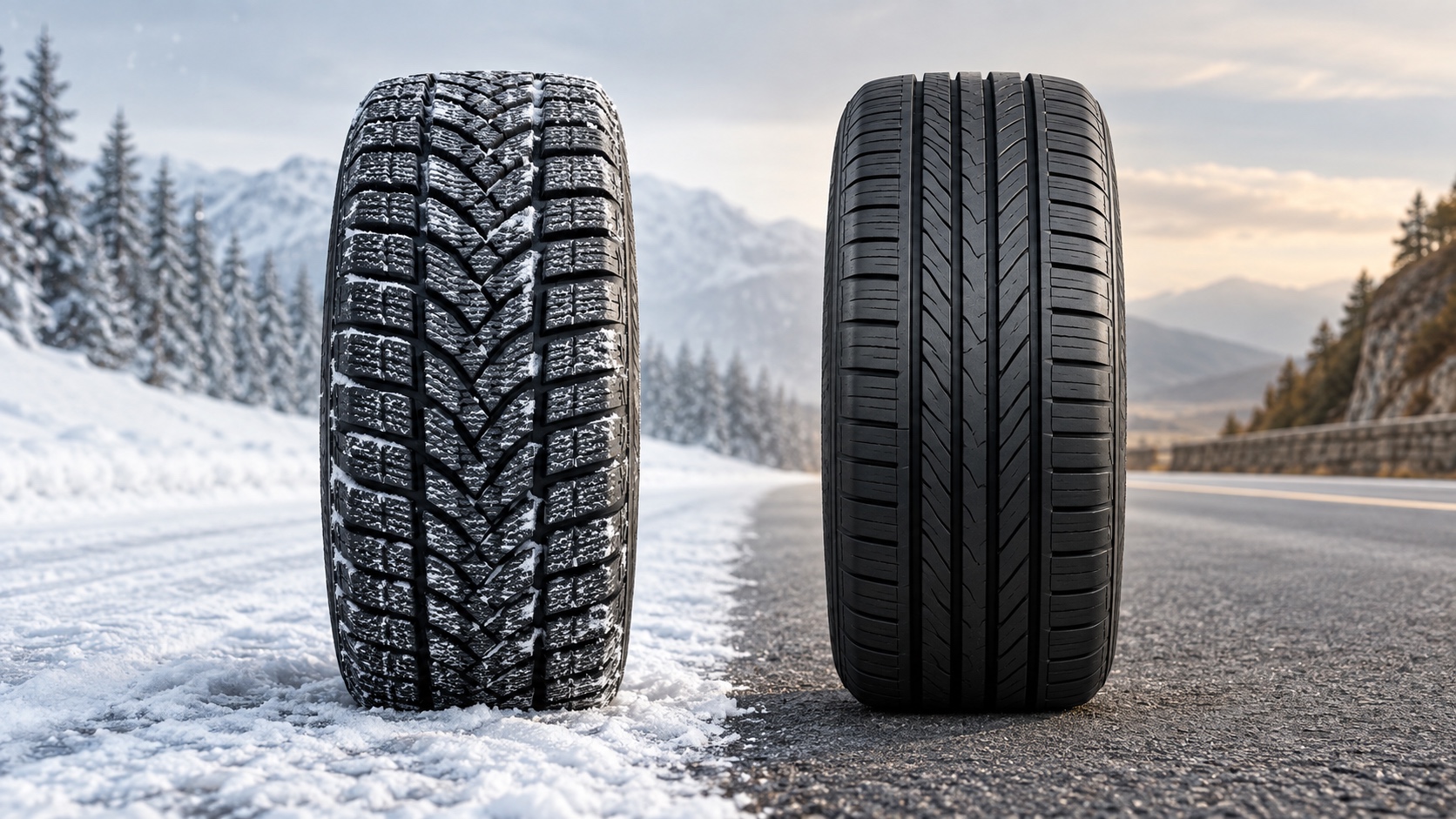
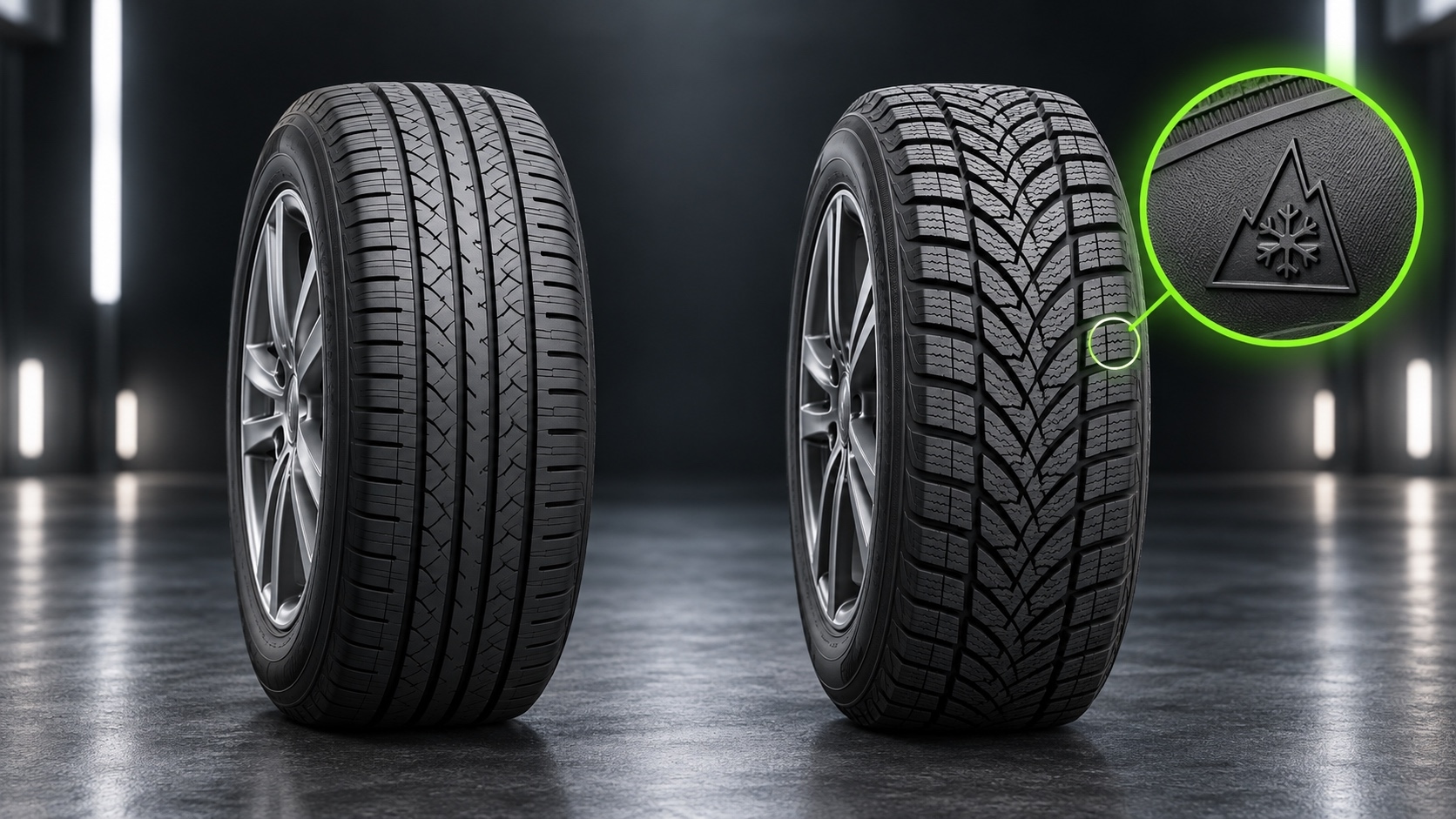
All-weather tires carry the 3PMSF snow rating; all-season tires do not. Learn the real differences in snow, wet, tread life, and price, and which one fits your climate.
All-weather tires are all-season tires that also pass a standardized snow traction test, shown by the Three-Peak Mountain Snowflake (3PMSF) symbol on the sidewall. Standard all-season tires do not carry it. If you see several snowfalls a year, all-weather is the better choice. If your winters are mild, a standard all-season tire is quieter, lasts longer, and costs less. Here is how the two compare and how to decide.
This guide is part of our complete guide to buying tires online.
In this guide
- The one difference that matters
- All-season vs. all-weather: side by side
- What all-season tires do well
- What all-weather tires do well
- Where each one falls short
- Which one you need, by climate
- Recommended tires in each category
- Frequently asked questions
The one difference that matters
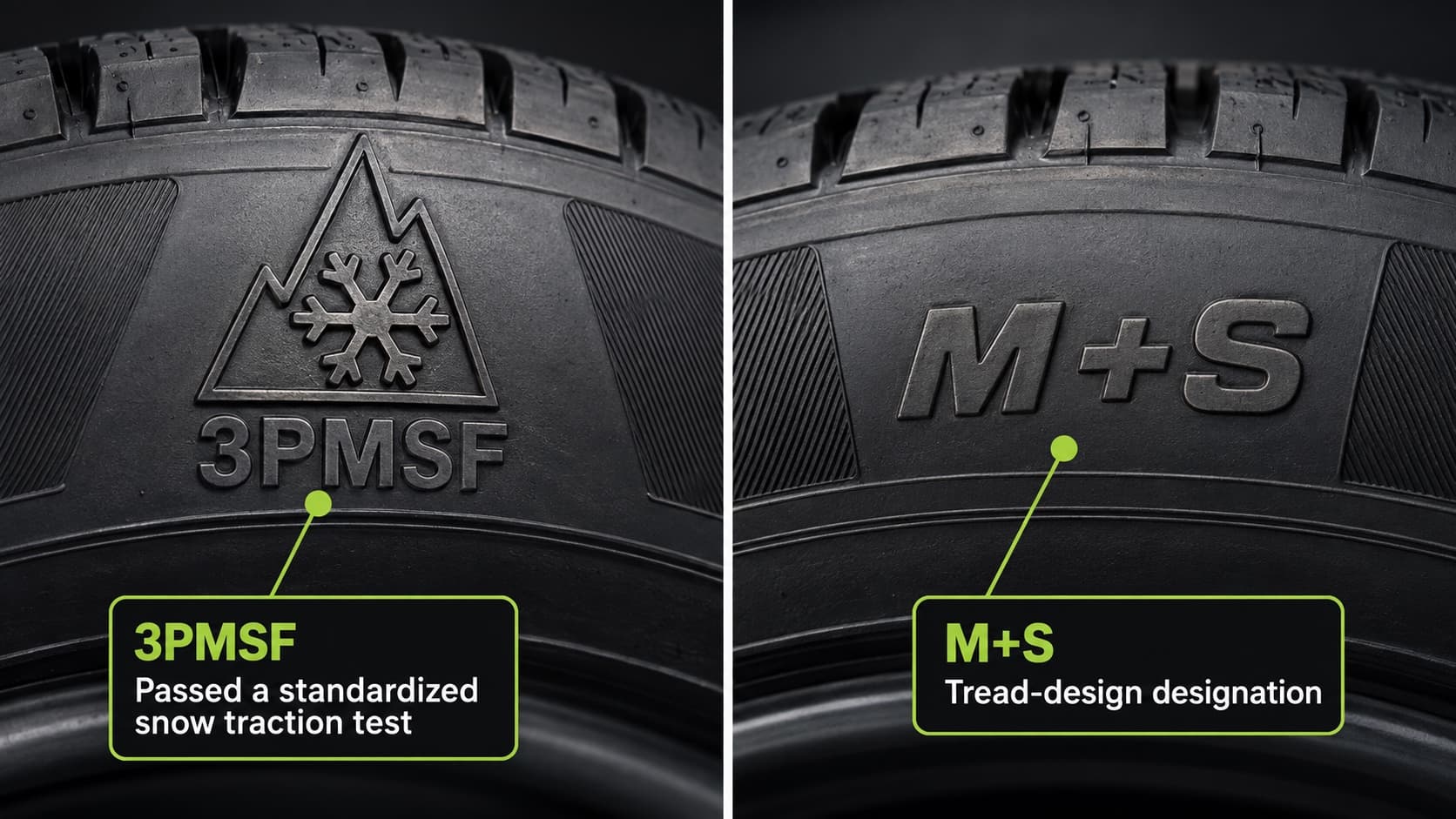
The difference is the snow rating. To carry the 3PMSF symbol, a tire must stop and accelerate on packed snow at least 10 percent better than a reference all-season tire in a standardized test. All-weather tires pass; standard all-season tires do not.
Everything else follows from that. To pass the snow test, all-weather tires use a softer rubber compound that stays flexible in cold and a tread with more biting edges (sipes). That compound and tread give up some tread life, some dry-road sharpness, and some quiet compared with a standard all-season.
Do not confuse 3PMSF with the M+S (mud and snow) marking. M+S is a tread-design designation with no performance test behind it. Nearly every all-season tire has it, and it does not mean the tire is good in snow.
All-season vs. all-weather: side by side
| All-season | All-weather | |
|---|---|---|
| Snow rating | M+S only | 3PMSF certified |
| Light snow | Adequate | Good |
| Packed snow and slush | Weak | Good |
| Ice | Weak | Fair |
| Cold-weather grip (below 45°F) | Compound stiffens | Compound stays flexible |
| Wet roads | Good | Good to very good |
| Dry handling | Sharper | Slightly softer |
| Road noise | Quieter | Slightly louder |
| Tread life | 60,000–90,000 mi warranties | 50,000–65,000 mi warranties |
| Price | Lower | 10–25% higher |
| Legal as a winter tire where required | No | Yes, in most jurisdictions |
| Best for | Mild winters, maximum tread life | Real winters, one set of tires year-round |
What all-season tires do well
All-season tires are the default on most cars sold in the United States because they handle the widest range of conditions for the longest time. The best ones carry 80,000- to 90,000-mile warranties, run quietly, grip well in rain, and cost less than any specialist tire.
They are the right choice if winter where you live means occasional cold and a dusting of snow that melts within a day. Their compound is tuned for a broad temperature range centered on mild weather, which is where most American drivers spend most of the year.
What all-weather tires do well
All-weather tires solve a specific problem: real winter without the cost and hassle of a second set of tires. They stop meaningfully shorter on snow than all-season tires, stay grippy in cold, and still work in summer, so you never swap them.
They have improved quickly. Early all-weather tires were noisy and wore fast. Current models like the Michelin CrossClimate2 and Goodyear Assurance WeatherReady 2 test close to premium all-seasons in dry and wet handling while carrying 60,000-mile warranties.
They also satisfy winter tire laws. In places that require winter-rated tires on certain roads or dates, a 3PMSF all-weather tire counts.
Where each one falls short
All-season tires lose grip fast as temperatures drop and snow accumulates. Below about 45°F the compound stiffens, and on packed snow they can take 20 to 30 percent longer to stop than an all-weather tire. If you regularly drive in snow on all-seasons, you are relying on the car’s traction control to cover for the tire.
All-weather tires are not winter tires. A dedicated winter tire still stops shorter on snow and much shorter on ice, because it uses an even softer compound and deeper tread that would wear out in summer. All-weather tires also wear faster than all-seasons and cost more, so if you never see snow you pay for capability you will not use.
Which one you need, by climate
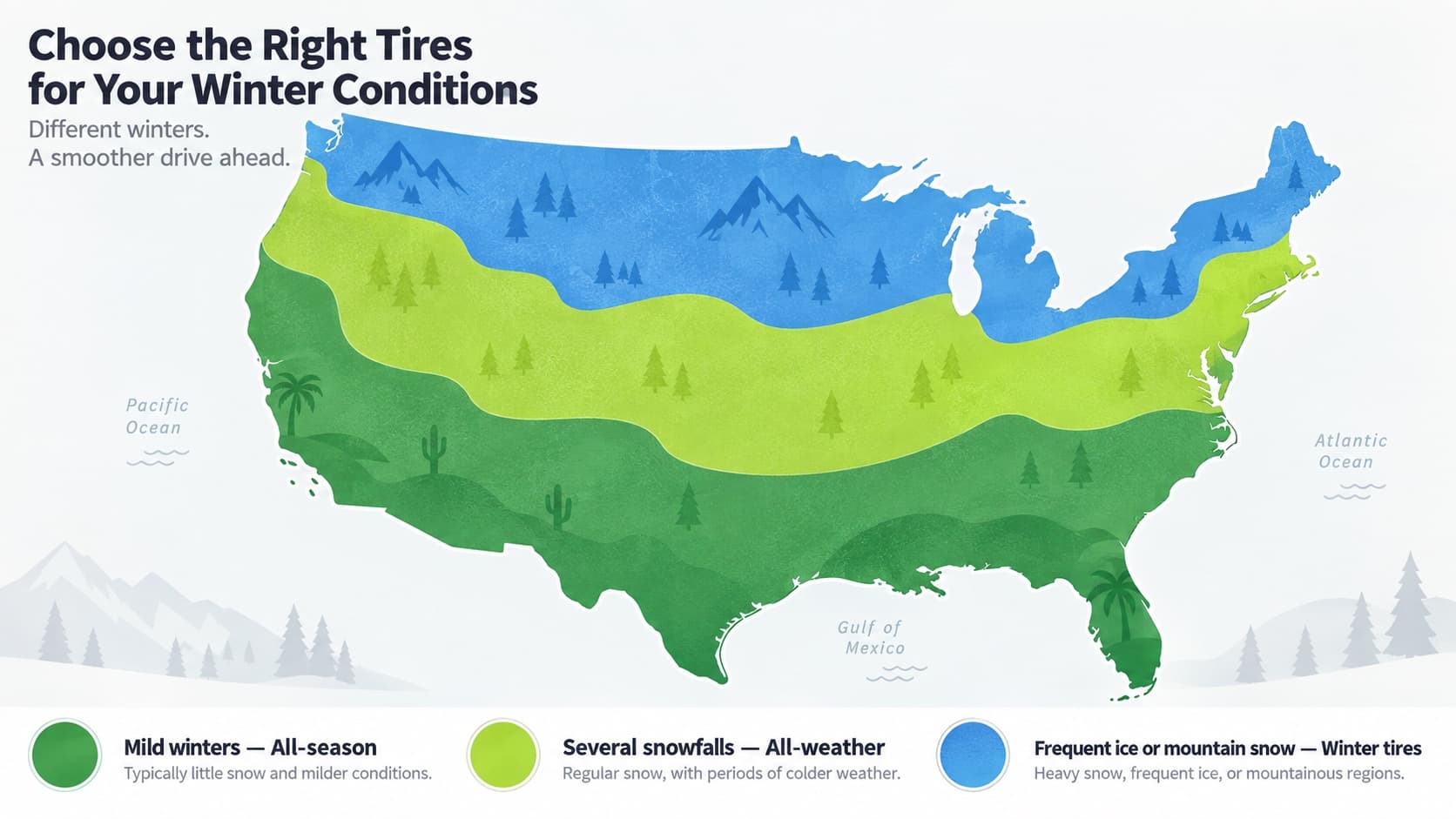
| Your winter | Choose | Why |
|---|---|---|
| Rarely below freezing, snow once or twice a year | All-season | Longest life, lowest cost, snow days are rare enough to wait out |
| Several snowfalls a year, roads plowed within a day | All-weather | Real snow grip without a second set of tires |
| Snow on the ground for weeks, regular ice, mountain driving | Winter tires (plus all-season or summer for the rest of the year) | Nothing else stops as short on snow and ice |
| Rainy, cool, little snow | All-season, or all-weather if you want extra cold-weather grip | Wet performance is similar; all-weather adds a margin in cold |
If you are between the first two rows, choose all-weather. The cost is a modest drop in tread life; the benefit is stopping distance on the worst days of the year. Our winter tires vs. all-season guide covers the third row in detail.
Find tires for your vehicle
Enter your vehicle details to see tires that fit.
Find tires for your vehicleRecommended tires in each category
All-season
- Michelin Defender2 — the longest-lasting all-season tested, quiet, strong in wet
- Continental TrueContact Tour 54 — premium performance at a mid-range price
- General AltiMAX RT45 — the best budget all-season
All-weather (3PMSF)
- Michelin CrossClimate2 — the benchmark all-weather tire; near all-season dry and wet performance
- Goodyear Assurance WeatherReady 2 — the mid-range alternative
- Firestone WeatherGrip — the budget all-weather
See the full rankings in our best all-season tires of 2026 guide, which includes both categories.
Frequently asked questions
Ready to choose? Browse all-season tires or all-weather tires for your vehicle, confirm fitment on the product page, and pick a local or mobile installer at checkout. Free shipping on every order and a price match on every tire.