Learn how to read tire size in under a minute. What every number and letter on your sidewall means, from width and aspect ratio to load index, speed rating, and the DOT date code.
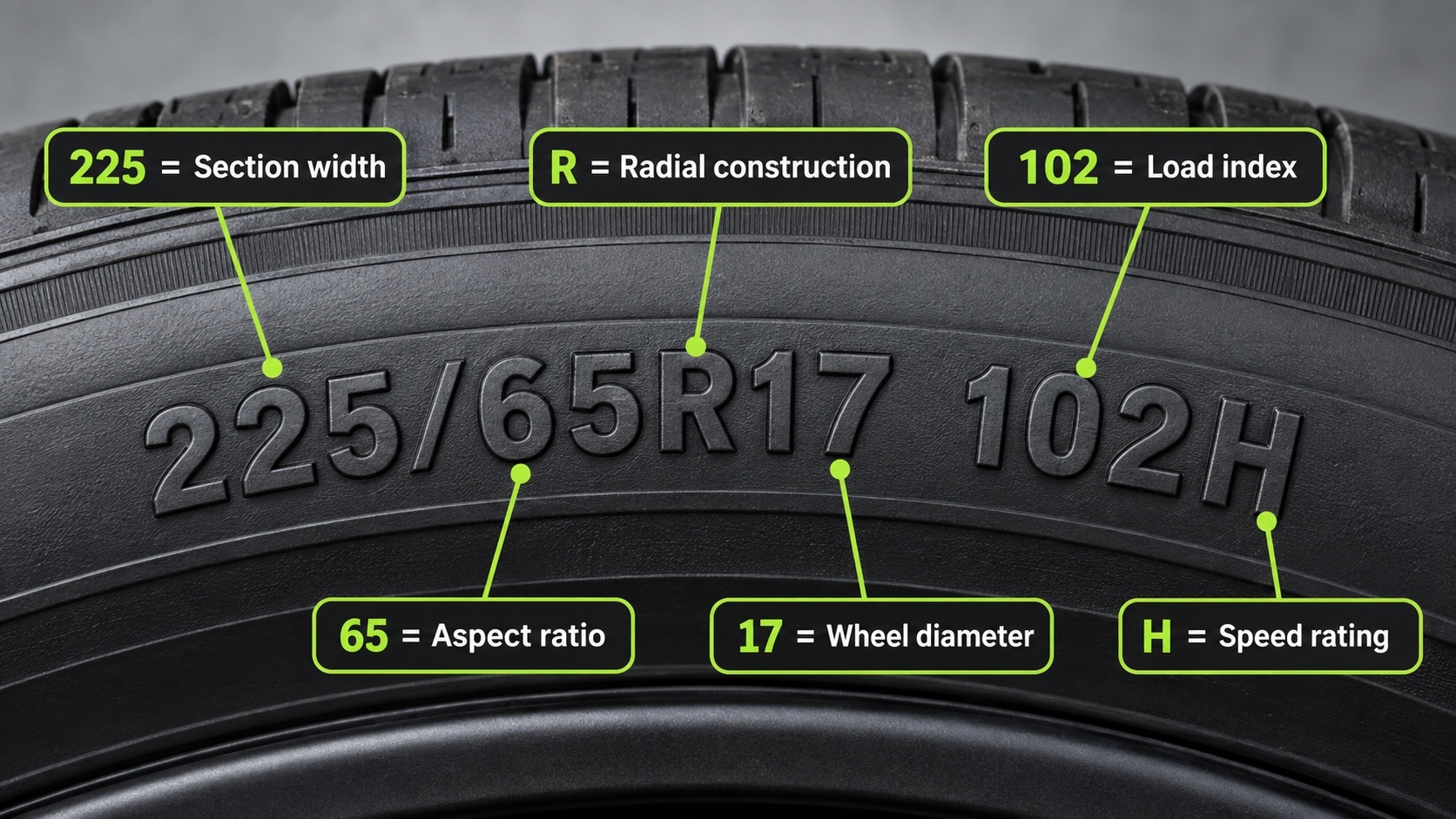
A tire size like 225/65R17 102H reads as: 225 mm wide, sidewall height 65 percent of the width, radial construction, fits a 17-inch wheel, load index 102 (1,874 lbs per tire), speed rating H (130 mph). The first three numbers are the size you shop by; the last two tell you whether a tire is safe for your vehicle. Here is how to read tire size, marking by marking, and what each one means.
This guide is part of our complete guide to buying tires online.
In this guide
- Where to find your tire size
- Reading the size, number by number
- Load index chart
- Speed rating chart
- The other sidewall markings
- P, LT, and other prefixes
- How to use your tire size to shop
- Frequently asked questions
Where to find your tire size
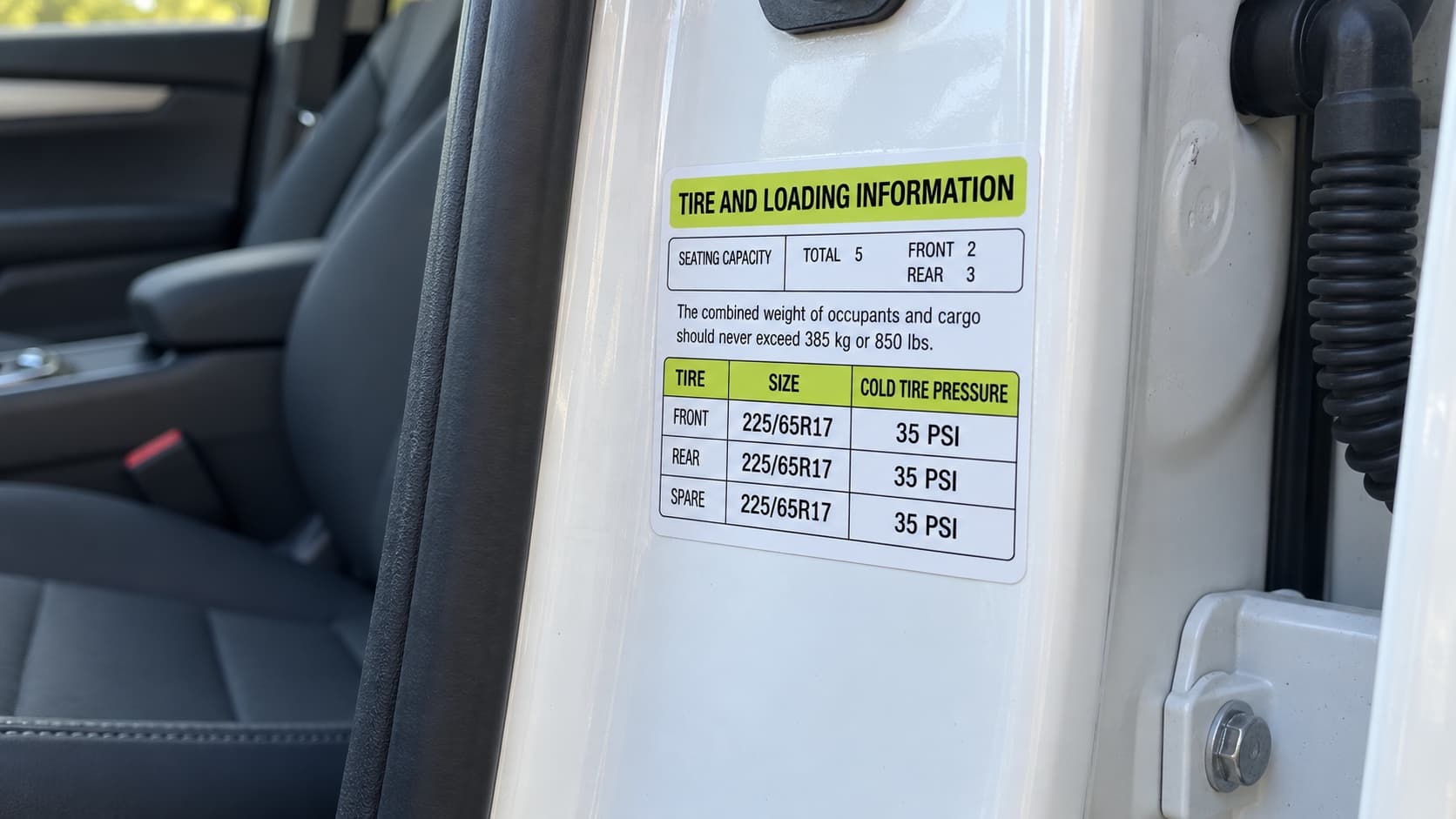
Your tire size is in two places:
- The sidewall of your current tires. Look for a string of numbers and letters like 225/65R17.
- The tire and loading information sticker on the driver’s door jamb. This lists the size the vehicle manufacturer specified, plus the recommended pressure.
If the two do not match, a previous owner or shop changed sizes. The door jamb is the correct reference, unless the change was a proper plus-size upgrade.
Reading the size, number by number
Using 225/65R17 102H as the example:
| Marking | Name | What it means | Our example |
|---|---|---|---|
| 225 | Section width | Width of the tire in millimeters, sidewall to sidewall | 225 mm (8.9 in) |
| 65 | Aspect ratio | Sidewall height as a percentage of the width | 65% of 225 = 146 mm sidewall |
| R | Construction | R = radial (nearly all modern tires); D = diagonal/bias; B = belted bias | Radial |
| 17 | Wheel diameter | Diameter of the wheel the tire fits, in inches | 17-inch wheel |
| 102 | Load index | Maximum weight each tire can carry, from a chart | 1,874 lbs per tire |
| H | Speed rating | Maximum sustained speed the tire is built for | 130 mph |
A few details worth knowing:
- The width is the tire, not the tread. Two 225 tires can have slightly different tread widths depending on design.
- The aspect ratio is a percentage, not a measurement. A 65 on a 225 tire is a taller sidewall than a 65 on a 195 tire.
- The wheel diameter must match exactly. A 17-inch tire only fits a 17-inch wheel.
Overall diameter is what matters for speedometer accuracy and fender clearance. For 225/65R17 it is about 28.5 inches. Changing any of the first three numbers changes it.
To calculate overall diameter: sidewall height in inches = (width × aspect ratio ÷ 100) ÷ 25.4. Multiply by two and add the wheel diameter. For 225/65R17: (225 × 0.65) ÷ 25.4 = 5.76 in; 5.76 × 2 + 17 = 28.5 in.
Find tires for your vehicle
Enter your vehicle details to see tires that fit.
Find tires for your vehicleLoad index chart
The load index is a code for how much weight each tire can support when properly inflated. Your replacement tires must meet or exceed the number on your door jamb sticker. Common values:
| Load index | Max load per tire (lbs) | Load index | Max load per tire (lbs) |
|---|---|---|---|
| 85 | 1,135 | 100 | 1,764 |
| 87 | 1,201 | 102 | 1,874 |
| 89 | 1,279 | 104 | 1,984 |
| 91 | 1,356 | 106 | 2,094 |
| 93 | 1,433 | 108 | 2,205 |
| 95 | 1,521 | 110 | 2,337 |
| 97 | 1,609 | 112 | 2,469 |
| 98 | 1,653 | 116 | 2,756 |
| 99 | 1,709 | 121 | 3,197 |
Multiply by four to get the total your tires can carry. A load index of 102 on all four tires supports 7,496 lbs, more than enough for a mid-size SUV with passengers and cargo.
Trucks and vehicles that tow need higher numbers.
LT tires list two load indexes, such as 121/118. The first applies when the tire is used alone on each side of an axle; the second applies in a dual-wheel setup.
Speed rating chart
The speed rating is the maximum speed the tire can sustain under its rated load. It also indicates how the tire is built: higher ratings usually mean stiffer construction and sharper handling. Match or exceed the rating on your door jamb.
| Rating | Max speed | Typical use |
|---|---|---|
| S | 112 mph | Family sedans, minivans |
| T | 118 mph | Family sedans, crossovers |
| H | 130 mph | Sport sedans, many SUVs |
| V | 149 mph | Sport sedans, performance crossovers |
| W | 168 mph | Performance cars |
| Y | 186 mph | High-performance cars |
| (Y) | Over 186 mph | Supercars |
| Q, R | 99–106 mph | Winter tires, some light truck tires |
You can go up a speed rating with no problem. Going down is not recommended: it can change handling and may void a tire manufacturer’s warranty. The one exception is winter tires, which are commonly sold with lower ratings and are accepted for winter use.
The other sidewall markings
Beyond the size, the sidewall carries several codes worth knowing.
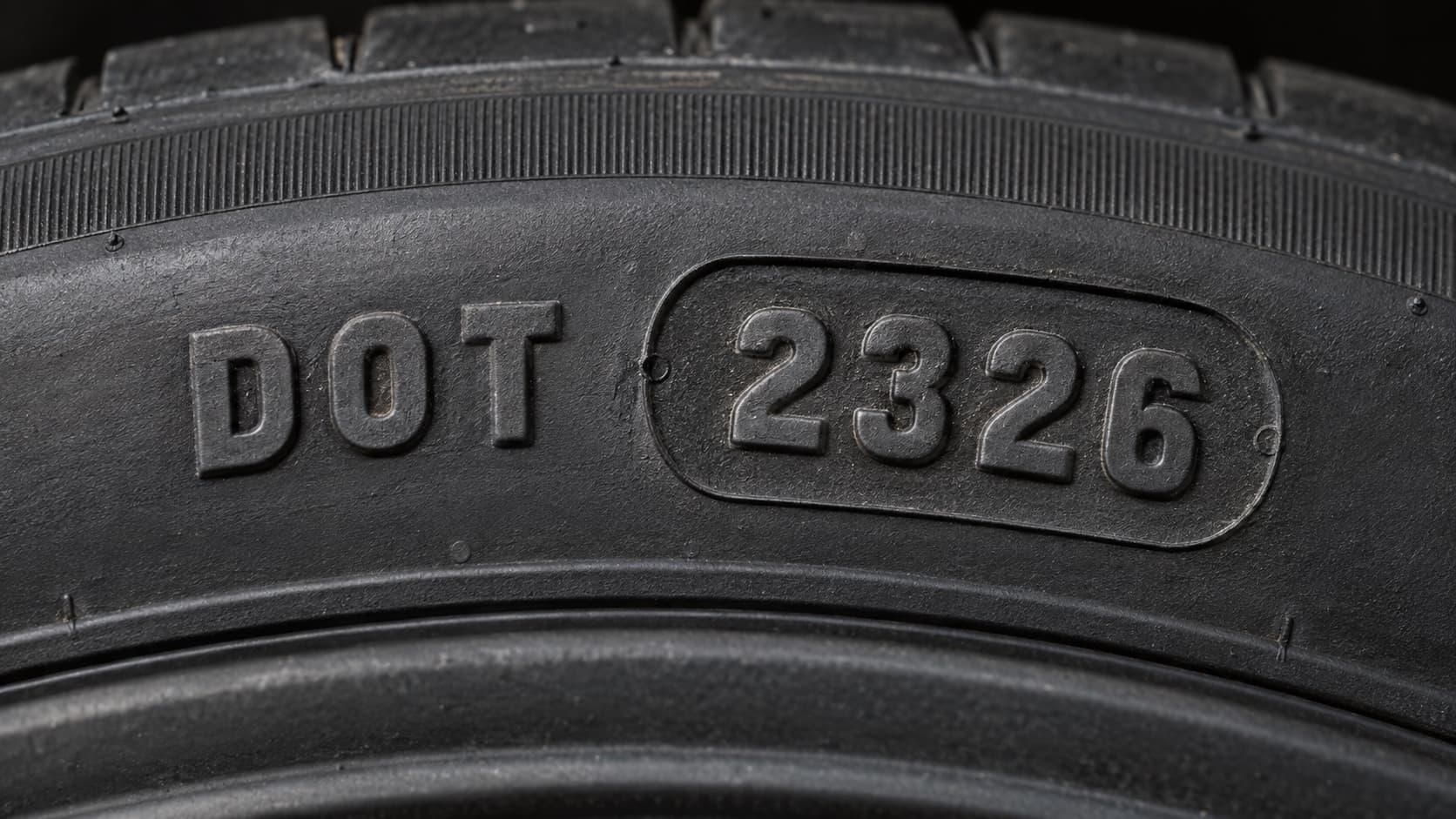
DOT code and date. A string beginning with DOT identifies the manufacturing plant, size, and date. The last four digits are the week and year of manufacture: 2326 means the 23rd week of 2026. Tires older than six years should be inspected regardless of tread; most manufacturers recommend replacement by ten years.
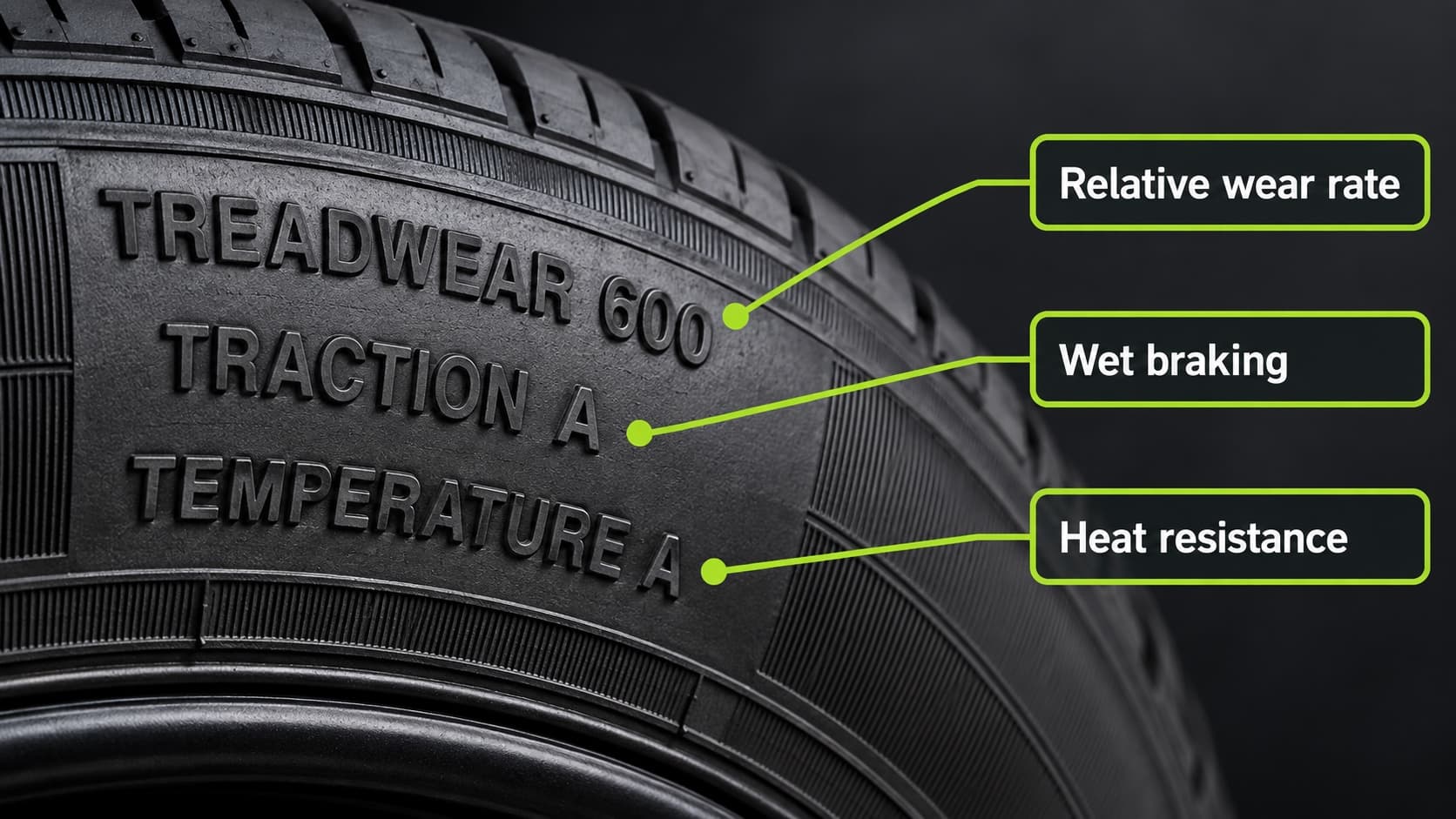
UTQG rating. Three parts, such as Treadwear 600, Traction A, Temperature A. Treadwear is a relative wear rate (higher lasts longer, but only comparable within one brand). Traction (AA, A, B, C) is wet braking. Temperature (A, B, C) is heat resistance.
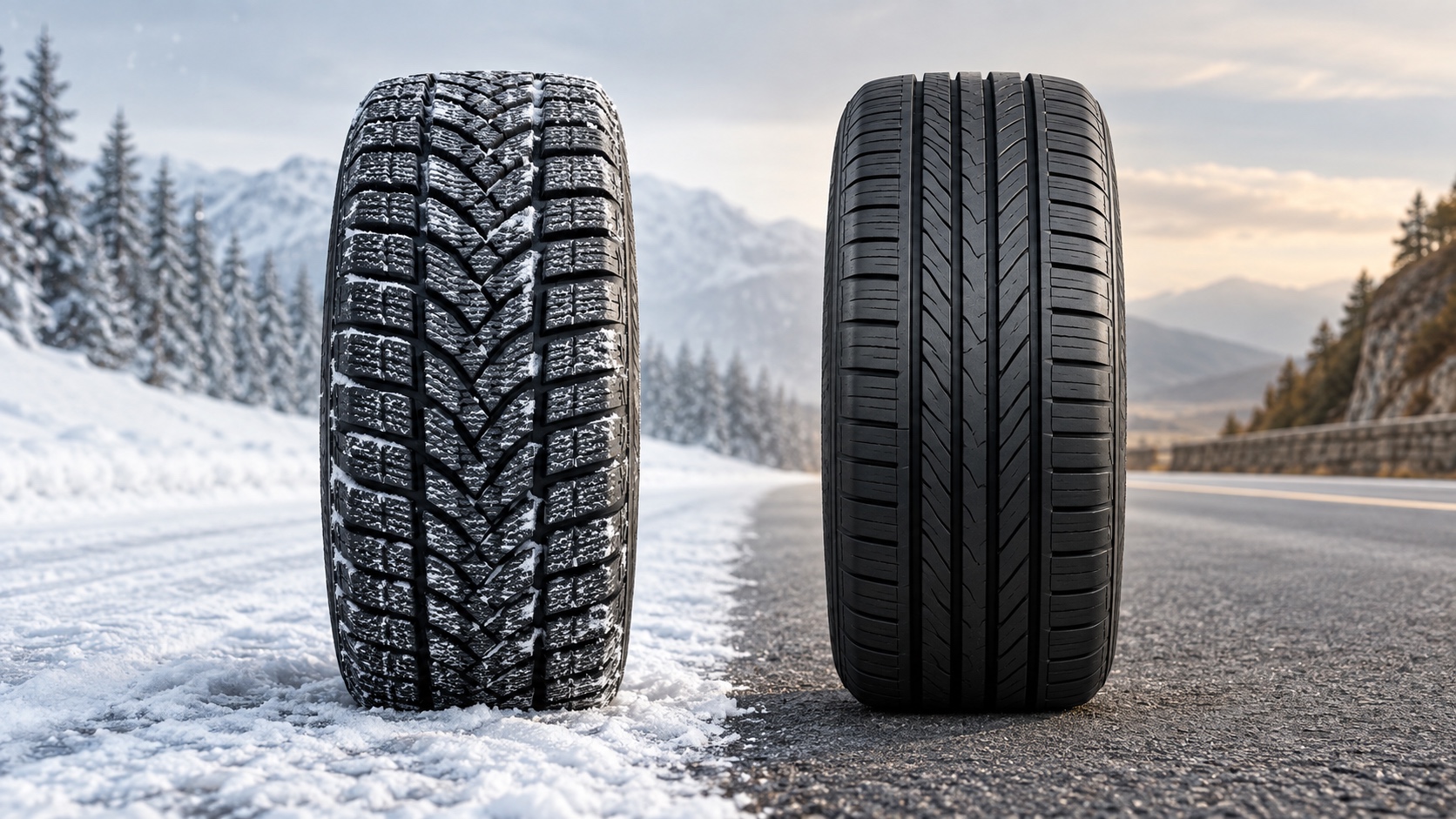
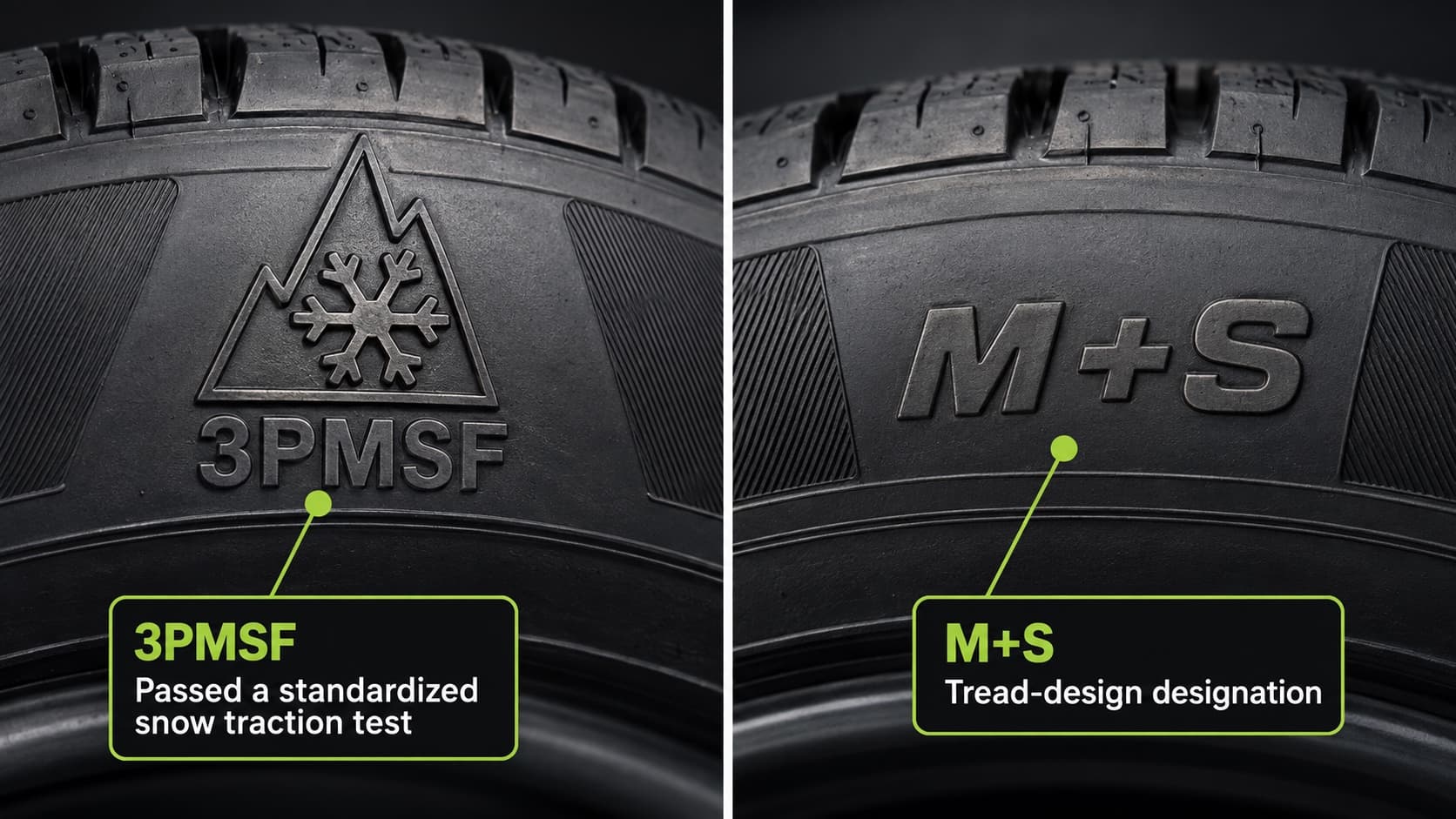
M+S. Mud and snow. A tread-design designation with no performance test behind it. Most all-season tires carry it.
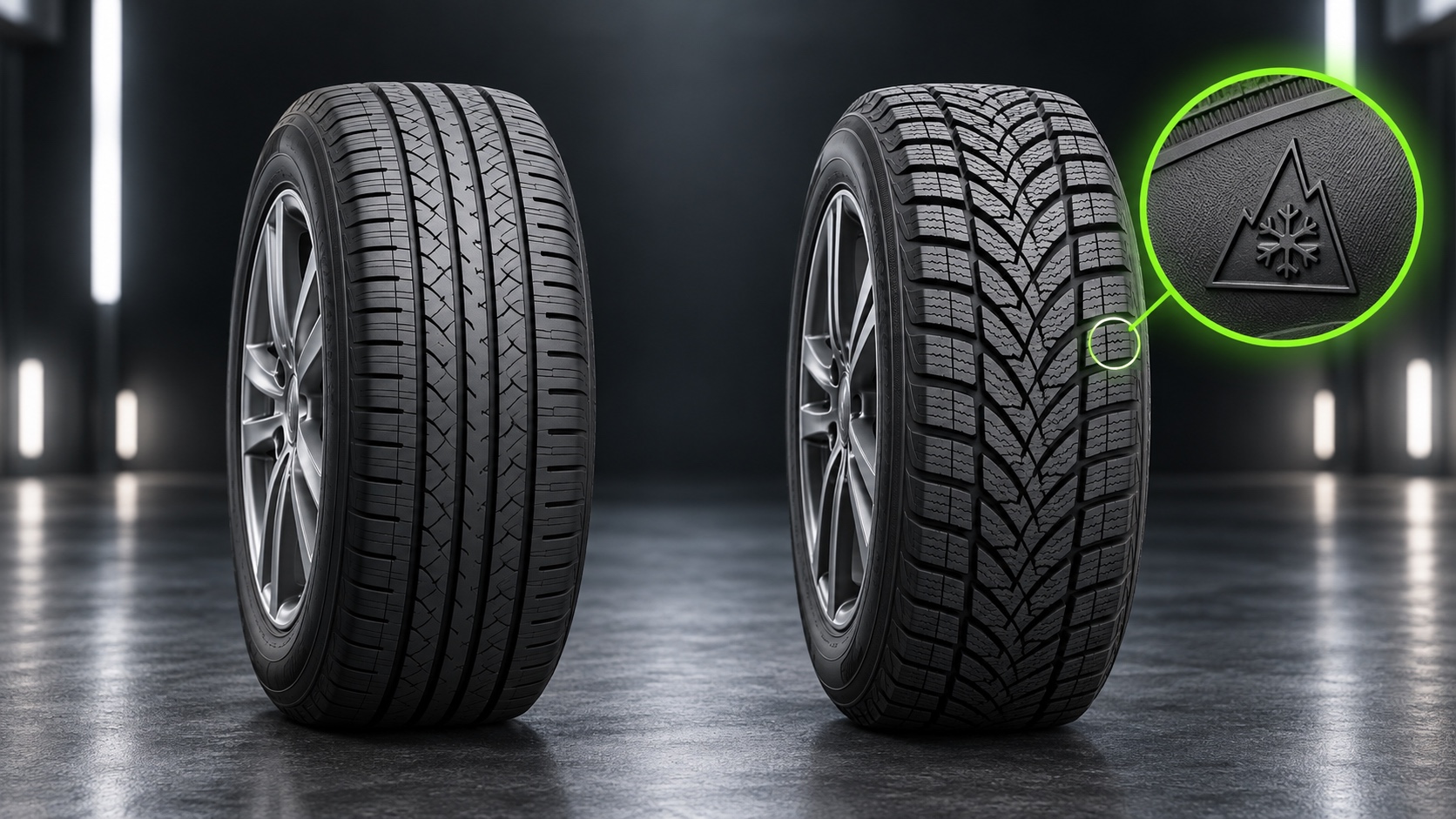
3PMSF. The Three-Peak Mountain Snowflake symbol means the tire passed a standardized snow traction test. Real winter capability, unlike M+S. See our guide to all-season vs. all-weather tires.
Max. Press. The maximum pressure the tire can hold, not the pressure to use. Your correct pressure is on the door jamb. See recommended tire pressure.
Rotation arrow or “Outside.” An arrow means the tire is directional and must roll one way. “Outside” means it is asymmetric and must be mounted with that side facing out.
XL or Extra Load. Reinforced to carry more weight at higher pressure. Some vehicles require it.
P, LT, and other prefixes
Some sizes start with a letter.
| Prefix | Meaning | Used on |
|---|---|---|
| P | P-metric, passenger tire | Cars, crossovers, SUVs, light-duty trucks |
| LT | Light truck | Heavy-duty pickups, vans, towing |
| (none) | Euro-metric | Same as P-metric with slightly different load ratings |
| T | Temporary spare | Compact spare tires |
| ST | Special trailer | Trailer tires only, never on a vehicle |
| C | Commercial | Vans and light commercial vehicles |
P-metric and Euro-metric tires of the same size are interchangeable for most uses. LT tires are not interchangeable with P-metric on heavy-duty trucks; use what the door jamb specifies. Our best all-terrain tires guide explains the difference in detail.
How to use your tire size to shop
You need three things from the sidewall: the size (225/65R17), the load index (102), and the speed rating (H).
- Enter the size in the TireDeals tire finder, or search by your vehicle and let the finder pull the size for you.
- Filter results to tires with a load index and speed rating equal to or higher than yours.
- On the product page, run the “Does this fit my vehicle?” checker to confirm.
That is the whole process. The size gets you to the right tires; the load and speed ratings keep you from buying one that fits the wheel but is wrong for the car.
Frequently asked questions
Know your size? Enter it in the TireDeals tire finder and see every tire that fits, with free shipping, a price match on every tire, and a local or mobile installer of your choice.