Check tire tread in 30 seconds with the penny test, the quarter test, or the built-in wear bars. Learn what each result means and exactly when to replace your tires.
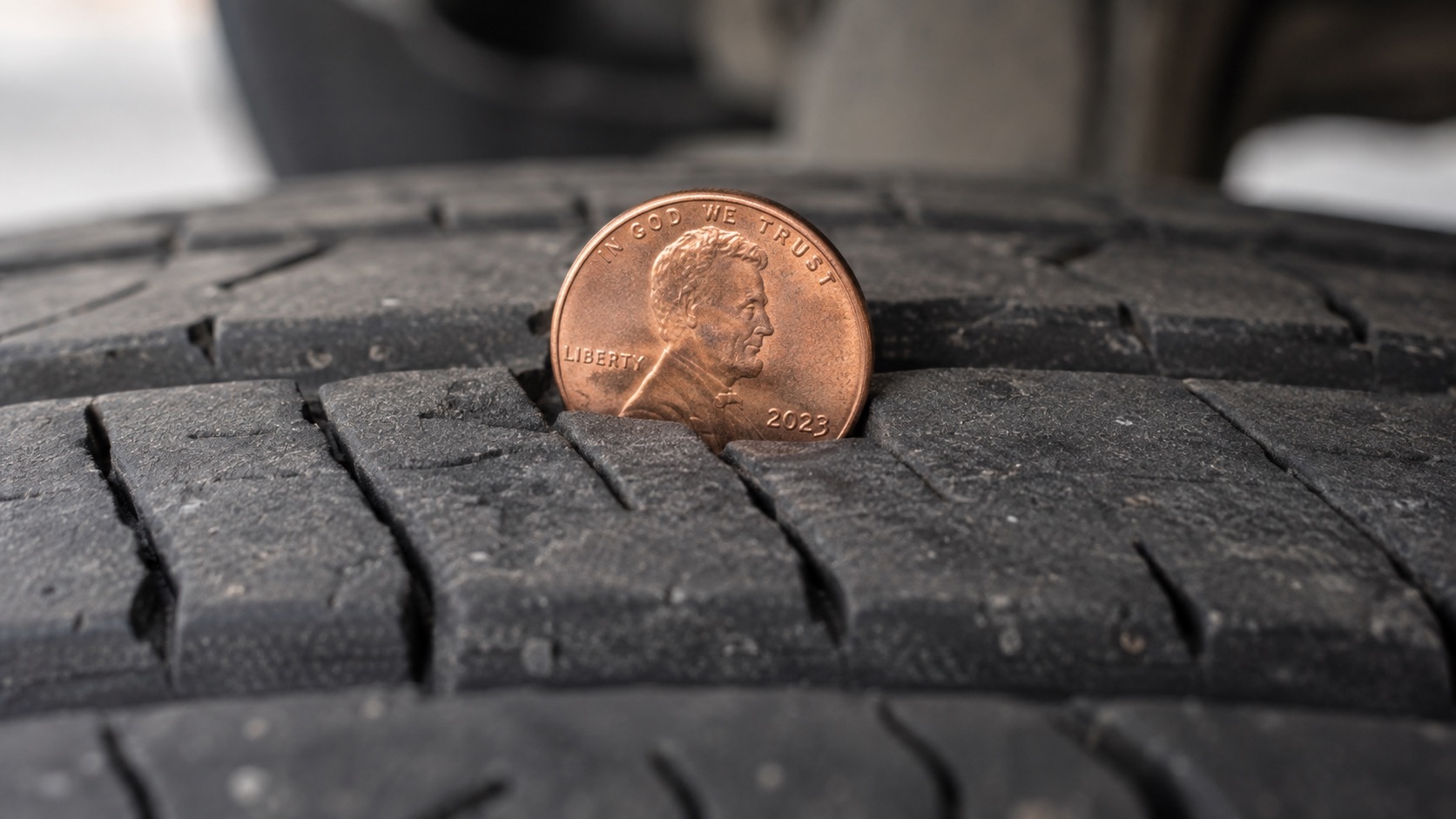
To check tire tread, put a penny into a tread groove with Lincoln’s head pointing down. If you can see the top of his head, the tread is at or below 2/32 of an inch and the tire needs replacing now. For a safer margin, use a quarter: if Washington’s head is visible, you are at 4/32 and should start shopping. Below are all three methods, what the numbers mean, and how to tell wear from damage.
Last updated: September 2026. Written by Adil Riaz, Founder & CEO of TireDeals.
This guide is part of our complete guide to buying tires online.
In this guide
- What tread depth means and why it matters
- The penny test
- The quarter test
- Wear bars (tread wear indicators)
- Using a tread depth gauge
- Reading wear patterns
- When to replace tires
- Frequently asked questions
What tread depth means and why it matters
Tread depth is the distance from the top of the tread block to the bottom of the groove, measured in 32nds of an inch. New tires typically start at 10/32 to 12/32 inch. All-terrain and winter tires start deeper.
The grooves have one job: moving water out from under the tire. As they wear, the tire pushes less water aside and starts to hydroplane sooner. Testing by tire manufacturers and Consumer Reports shows wet stopping distances grow sharply once tread drops below 4/32 inch, well before the 2/32 legal limit.
Find tires for your vehicle
Enter your vehicle details to see tires that fit.
Find tires for your vehicleThe penny test
The penny test tells you whether a tire has hit the 2/32 inch legal minimum.
- Take a penny and hold it with Lincoln’s head pointing down, toward the tire.
- Insert it into a tread groove.
- Look at Lincoln’s head. If the tread covers any part of it, you have more than 2/32 inch. If you can see all of his head, the tread is at or below 2/32 and the tire is worn out.
- Repeat in three spots across the tire: inner edge, center, and outer edge. Tires often wear unevenly, and one worn edge is enough to fail.
- Repeat on all four tires.
| Tread depth | Status | What to do |
|---|---|---|
| 10/32–12/32 in | New | Nothing; rotate on schedule |
| 6/32–9/32 in | Good | Normal use; check monthly |
| 5/32 in | Fair | Wet grip starting to fall; plan ahead |
| 4/32 in | Replace soon | Start shopping; wet and snow traction reduced |
| 3/32 in | Replace now | Hydroplaning risk is high |
| 2/32 in or less | Unsafe and illegal in most states | Do not drive in rain; replace immediately |
The penny test is a pass/fail check for the legal limit. It does not tell you that a tire is still good in the rain. For that, use a quarter.
The quarter test
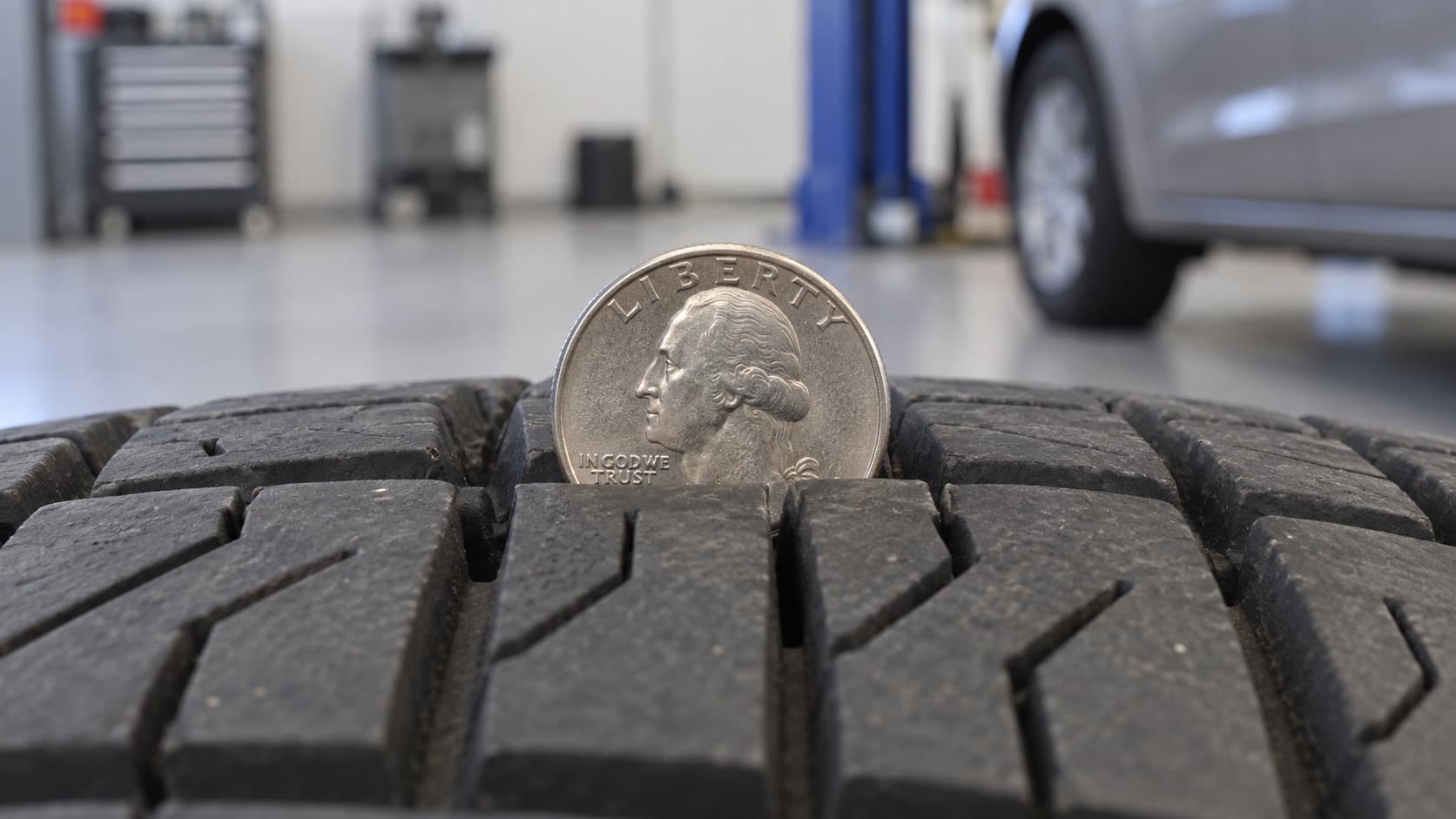
The quarter test checks for 4/32 inch, the depth where wet performance starts to drop and most tire experts recommend replacement.
- Hold a quarter with Washington’s head pointing down.
- Insert it into a tread groove.
- If the tread touches the top of Washington’s head, you have about 4/32 inch or more. If you can see the top of his head, you are below 4/32 and should replace the tires soon.
If you live where it rains often or you see snow, treat the quarter test as your replacement trigger rather than the penny test.
Wear bars (tread wear indicators)
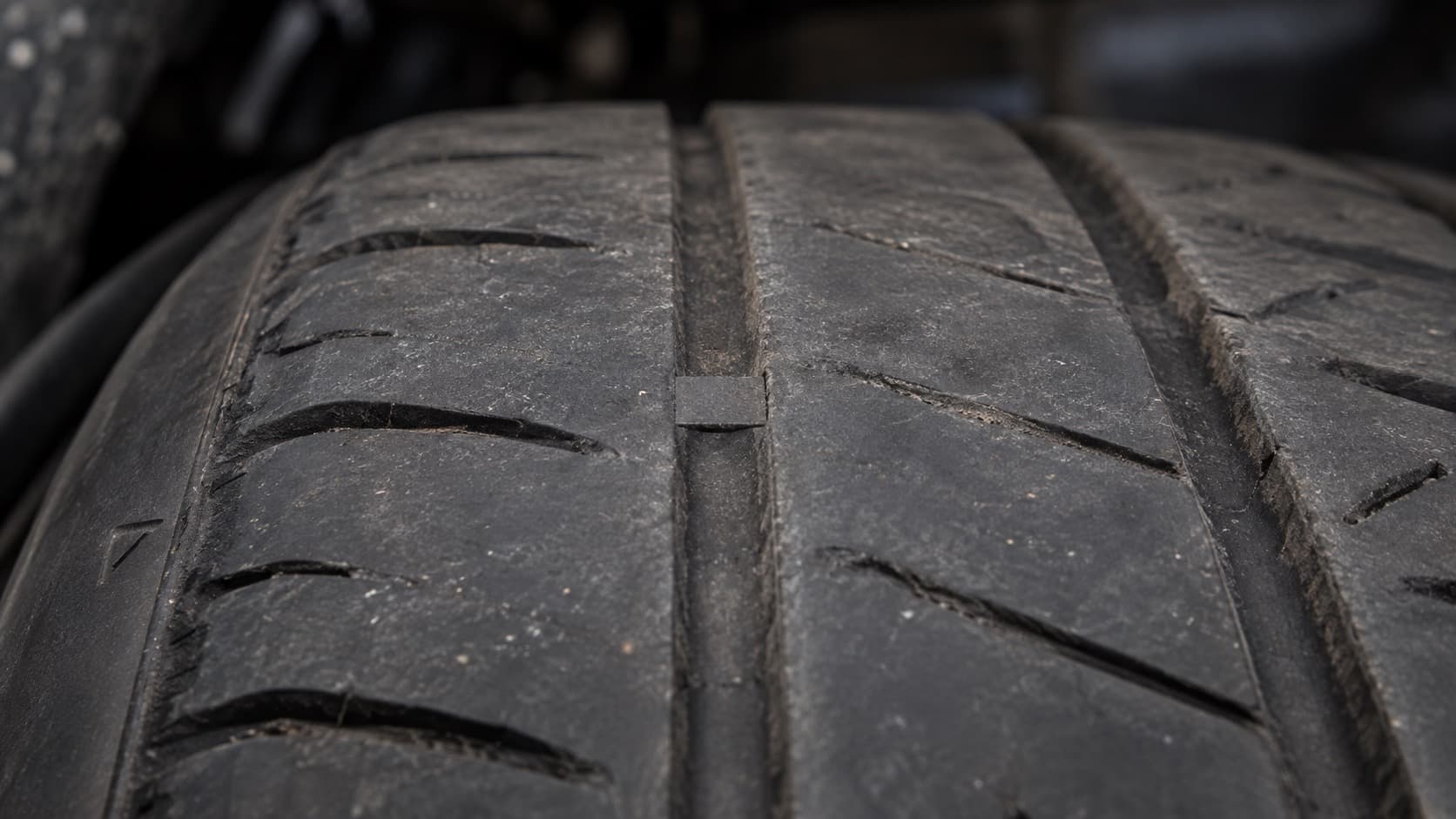
Every tire has built-in wear bars: small raised strips of rubber molded across the bottom of the main grooves at 2/32 inch. When the tread surface wears down level with the bars, the tire is at the legal minimum.
To find them, look for small arrows or triangles on the sidewall near the tread. They point to the location of the bars. On a new tire the bars sit well below the tread surface. On a worn tire they look like flat bridges connecting the tread blocks.
Wear bars are the check that needs no tools at all. If the bars are flush with the tread anywhere on the tire, replace it.
Using a tread depth gauge
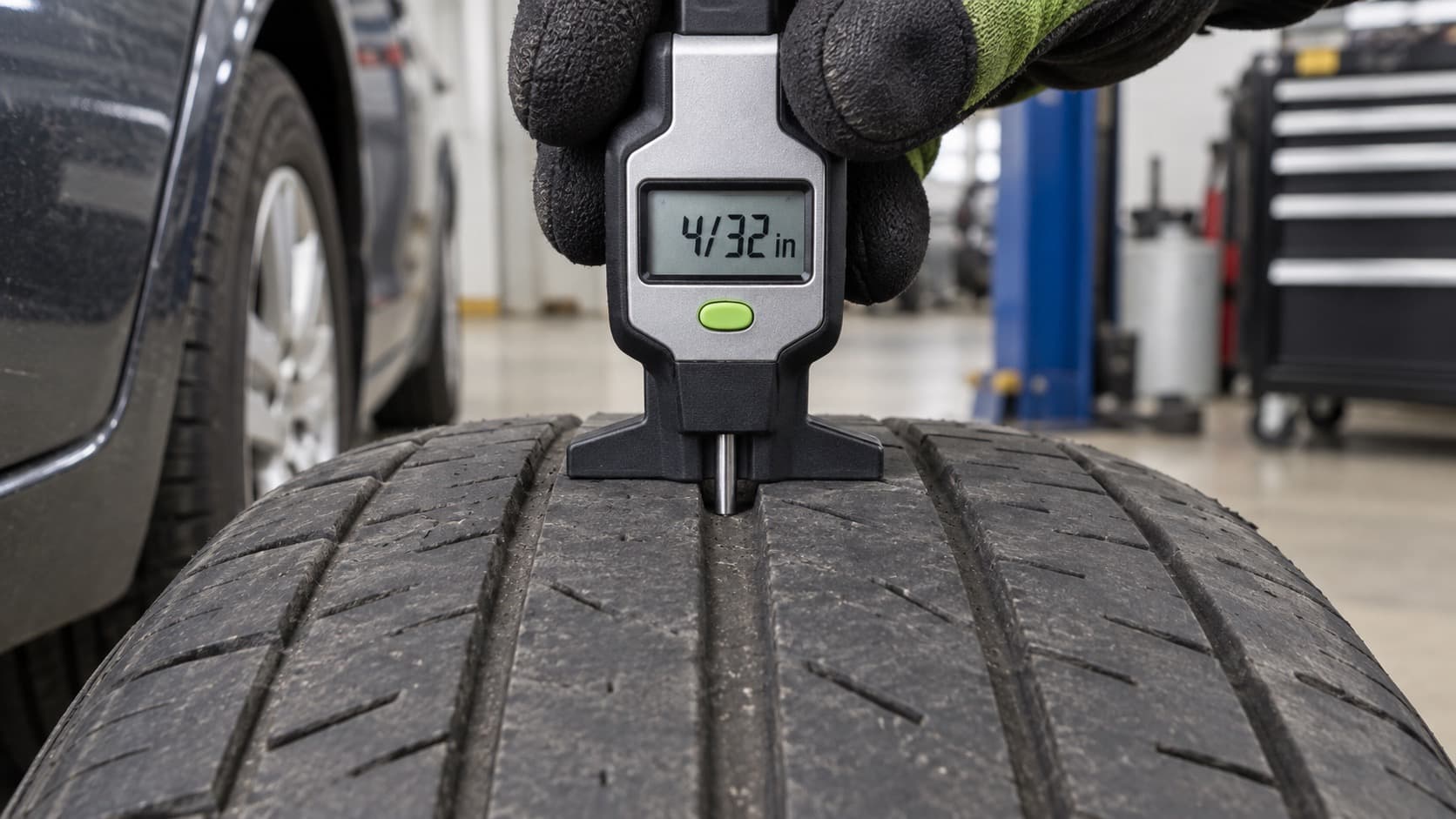
A tread depth gauge costs $5 to $15 and gives an exact reading. Push the probe into a groove, press the base flat against the tread, and read the number. Take readings at the inner edge, center, and outer edge of each tire and write them down.
A gauge is worth owning because it shows trends. If your fronts read 5/32 and your rears read 8/32, you are overdue for a rotation. If one edge reads 3/32 and the other 7/32, you have an alignment problem. See how often to rotate your tires.
Reading wear patterns
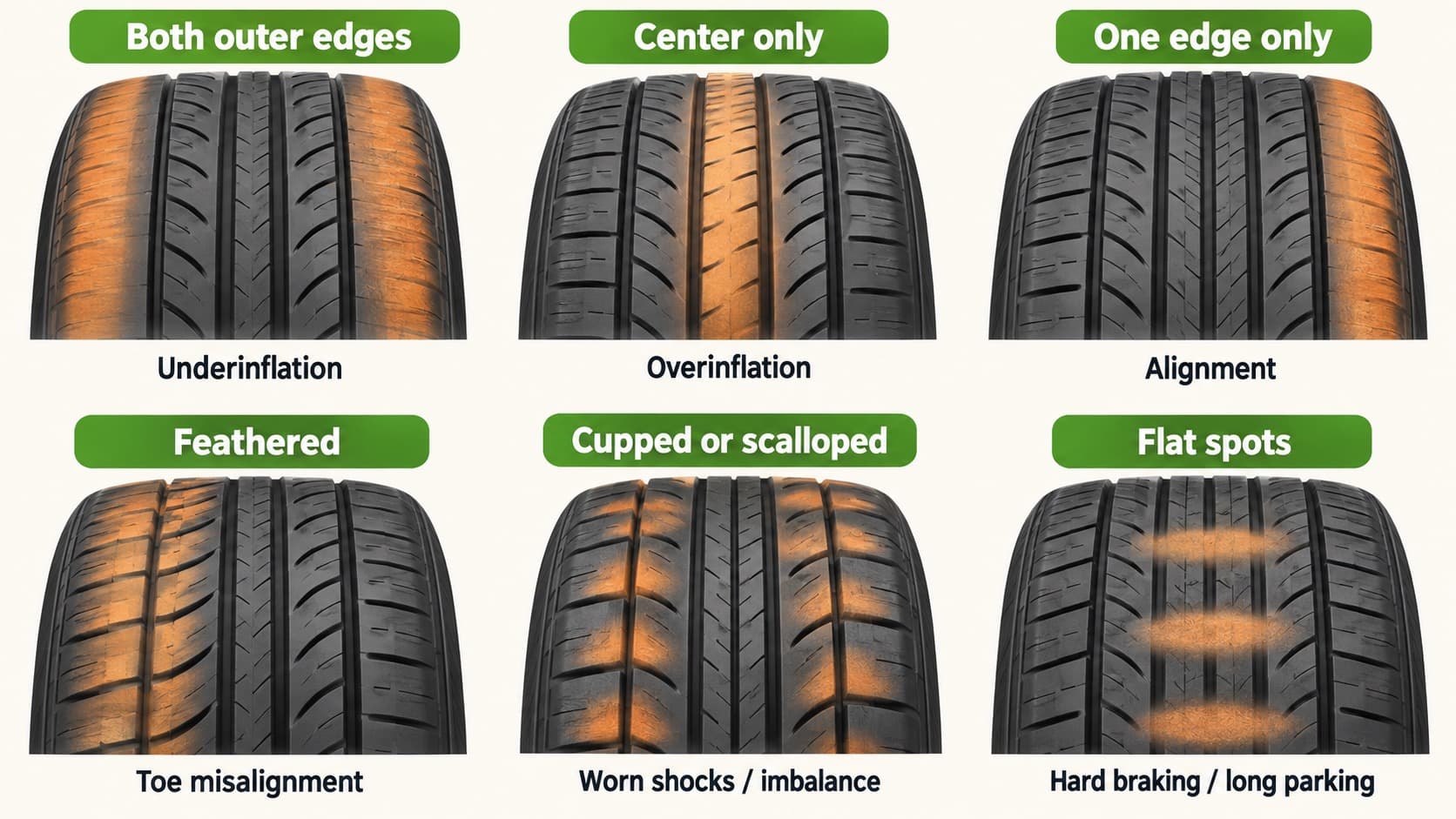
Where a tire wears tells you what is wrong.
Fix the cause before installing new tires or the new set will wear the same way.
| Wear pattern | Likely cause | Fix |
|---|---|---|
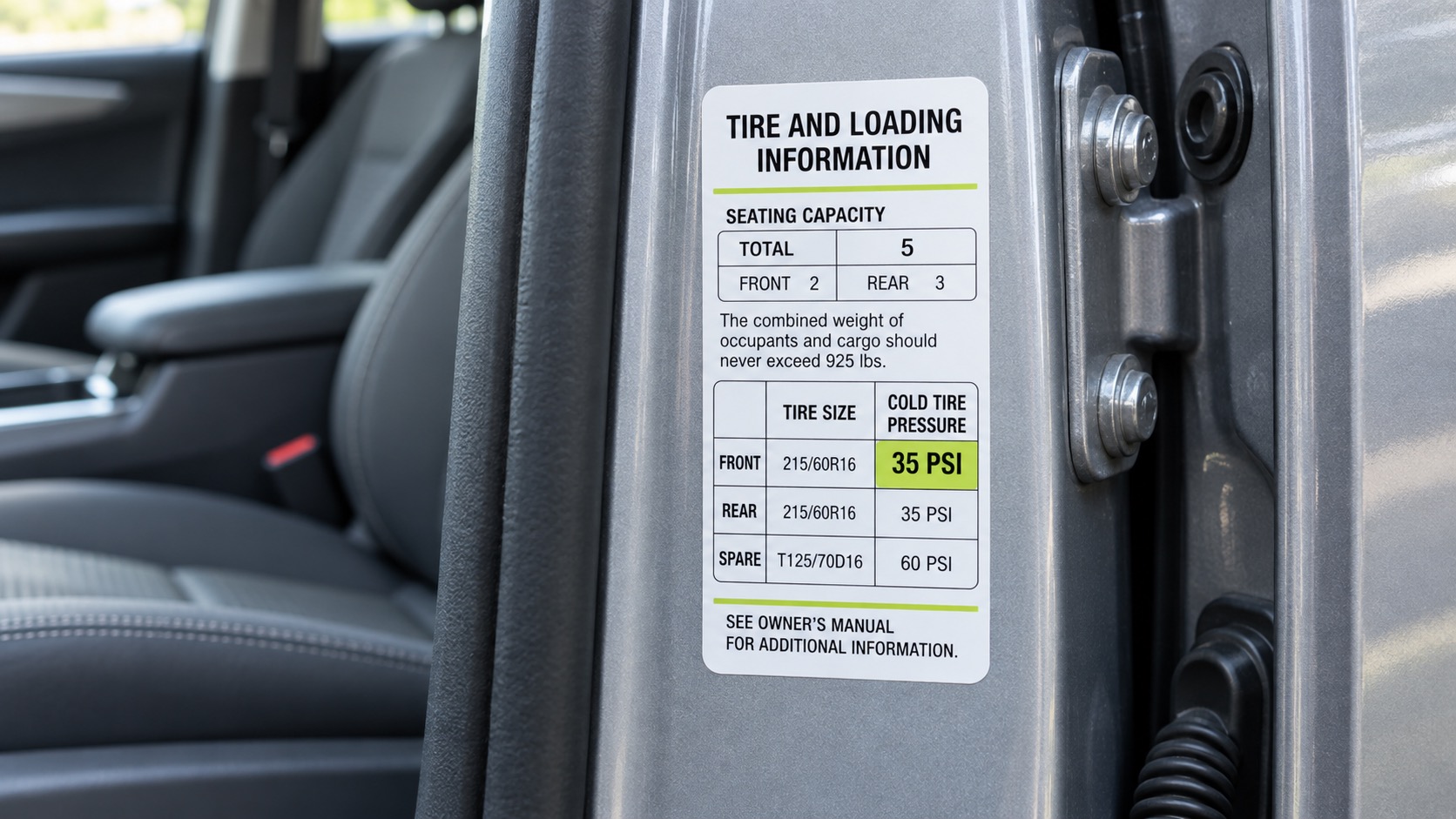
| Both outer edges | Underinflation | Set pressure to the door sticker; see recommended tire pressure |
| Center only | Overinflation | Lower pressure to the door sticker |
| One edge only | Alignment (camber or toe) | Alignment check |
| Feathered (blocks worn at an angle) | Toe misalignment | Alignment check |
| Cupped or scalloped | Worn shocks or struts, or imbalance | Suspension inspection; balance |
| Flat spots | Hard braking or long parking | Usually wears out; replace if vibration persists |
When to replace tires
Replace your tires when any one of these is true:
- Tread is at 4/32 inch or less in any spot on any tire (quarter test fails).
- Wear bars are flush with the tread.
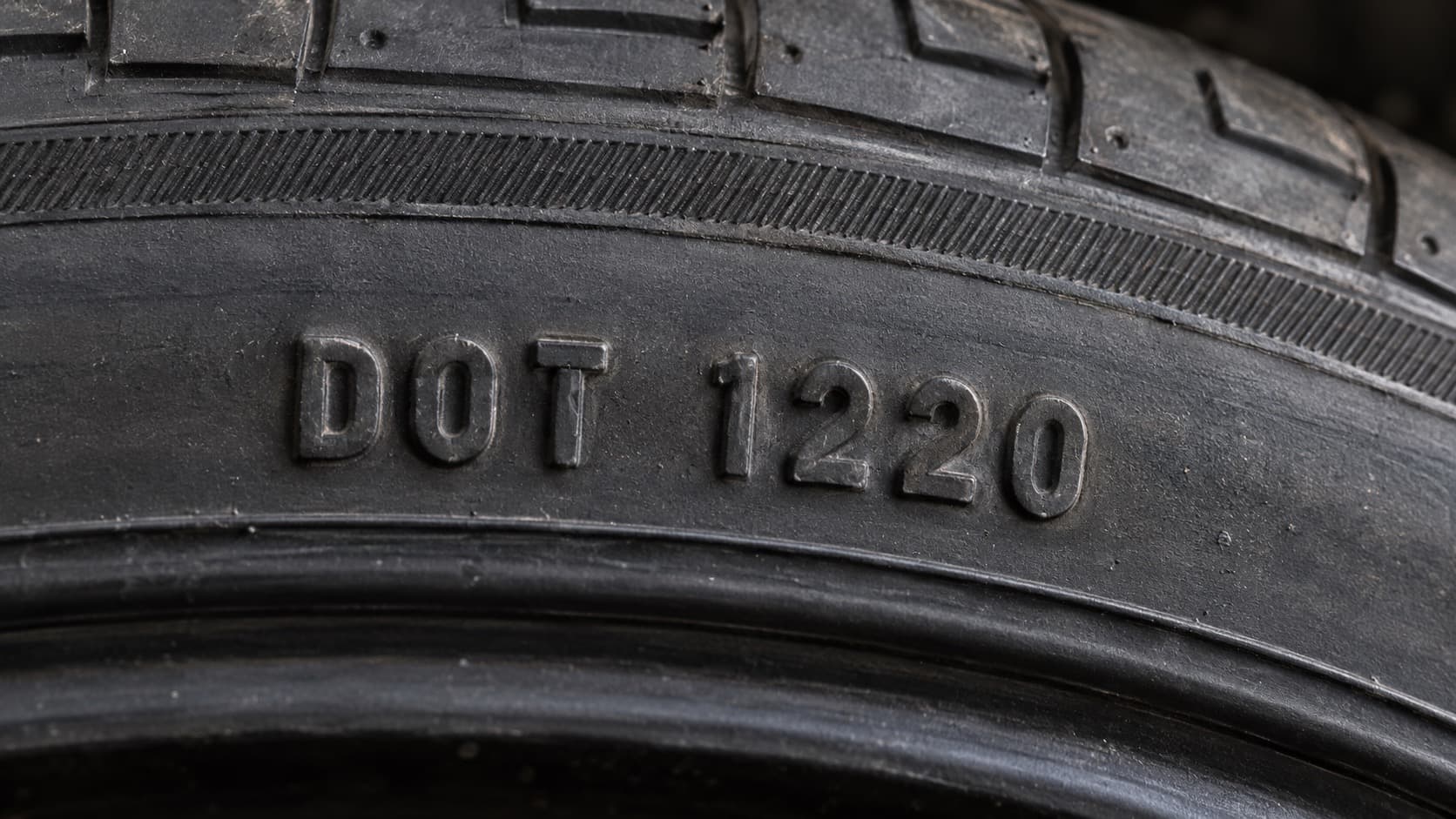
- The tire is ten years old, or six or more with visible cracking, regardless of tread. Rubber hardens with age, and most manufacturers set ten years as the limit. Find the age in the DOT code on the sidewall: the last four digits are the week and year of manufacture, so 1220 means the 12th week of 2020.
- You see cracks, bulges, or exposed cords. These are structural failures, not wear.
- A puncture is in the sidewall or shoulder, or larger than 1/4 inch, which cannot be safely repaired.
You do not have to replace all four at once on a two-wheel-drive car if the other pair has plenty of tread. Put the new pair on the rear axle for stability. On all-wheel-drive vehicles, replace all four unless your manual says otherwise, because mismatched tread depth can damage the drivetrain.
Frequently asked questions
Failed the quarter test? You have time to shop, so use it. Find tires for your vehicle at the lowest price on the market, with free shipping and a price match on every tire. Confirm fitment on the product page and choose a local or mobile installer at checkout. See our guide to the best time to buy tires if you want to catch a rebate.