
Rotate your tires every 5,000 to 8,000 miles. See the right interval for your vehicle, the correct rotation pattern for FWD, RWD, and AWD, what it costs, and when to skip it.
Rotate your tires every 5,000 to 8,000 miles, or every six months, whichever comes first. Most drivers can simply rotate at every oil change. The exact interval depends on your vehicle, drivetrain, and how you drive, and it is printed in your owner’s manual. Below is the interval by vehicle type, the correct pattern for your drivetrain, and what it should cost.
Last updated: September 2026. Written by Adil Riaz, Founder & CEO of TireDeals.
This guide is part of our complete guide to buying tires online.
In this guide
- Why tire rotation matters
- How often to rotate by vehicle type
- Tire rotation patterns by drivetrain
- Signs you are overdue
- What tire rotation costs
- Can you skip it?
- Frequently asked questions
Why tire rotation matters
Tires wear at different rates depending on where they sit on the car. On a front-wheel-drive vehicle, the front tires steer, brake hardest, and deliver power, so they wear faster than the rears. Rotation moves each tire to a new position so the wear evens out.
The payoff is real. Evenly worn tires last longer, so a set that might be replaced at 40,000 miles can reach its full 60,000- or 80,000-mile warranty. They also grip more predictably in rain and keep the car tracking straight.
There is a warranty reason too. Most tire manufacturers require proof of regular rotation to honor a tread life warranty. Keep your receipts.
How often to rotate by vehicle type
Shorten the interval if you drive mostly in stop-and-go city traffic, carry heavy loads, drive on rough roads, or drive aggressively. Your owner’s manual overrides any general rule.
Tire makers and vehicle makers publish slightly different numbers. Michelin suggests 6,000 to 8,000 miles, Bridgestone 5,000, Goodyear 3,000 to 6,000, and Toyota specifies 5,000 miles or six months on many models. When they disagree, follow your vehicle manual; it was written for your car’s weight and drivetrain.
| Vehicle | Interval | Notes |
|---|---|---|
| Sedan, coupe, hatchback | 5,000–7,500 miles | Line it up with oil changes |
| SUV, crossover, minivan | 5,000–7,500 miles | Heavier vehicles wear front tires faster |
| Pickup truck | 5,000–7,500 miles | Sooner if you tow or haul regularly |
| All-wheel drive (AWD) | 3,000–6,000 miles | All four tires drive; matched tread depth protects the drivetrain |
| Electric vehicle | 5,000–6,000 miles | Instant torque and extra weight wear tires faster |
| Performance car | 3,000–5,000 miles | Soft compounds wear quickly; check for staggered sizes |
Tire rotation patterns by drivetrain
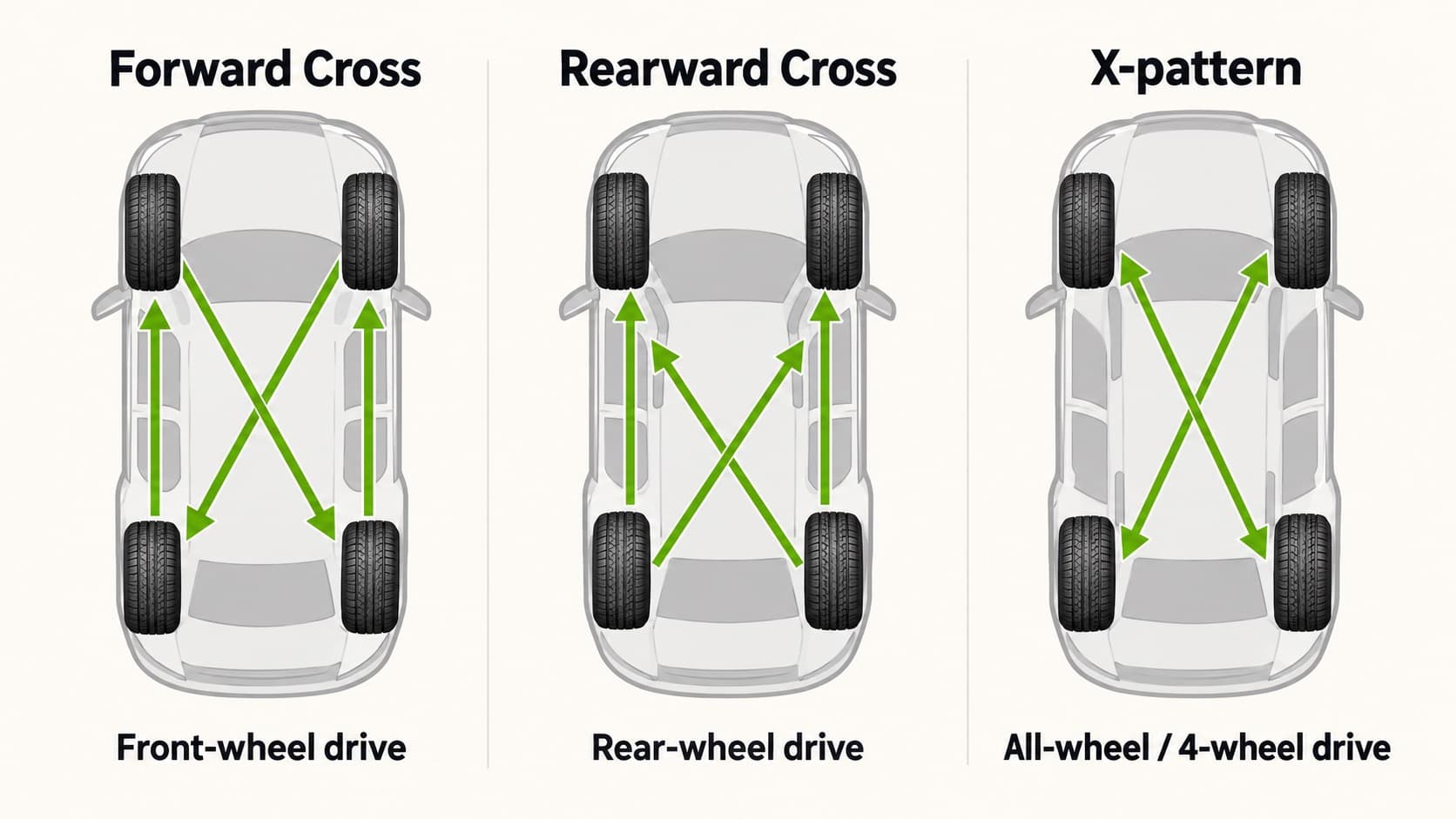
The pattern depends on which wheels drive the car and whether your tires are directional or different sizes front and rear.
| Drivetrain | Pattern | How it works |
|---|---|---|
| Front-wheel drive | Forward cross | Fronts move straight back; rears cross to the front |
| Rear-wheel drive | Rearward cross | Rears move straight forward; fronts cross to the rear |
| All-wheel / 4-wheel drive | X-pattern | All four tires cross diagonally |
| Directional tires | Front to back only | Same side; tires cannot switch sides |
| Staggered (different front/rear sizes) | Side to side only, if non-directional | Fronts swap with each other; rears swap with each other |
| Staggered and directional | Cannot be rotated | Tires would have to be dismounted and remounted |
How to rotate tires yourself, if you have a jack, jack stands, and a torque wrench
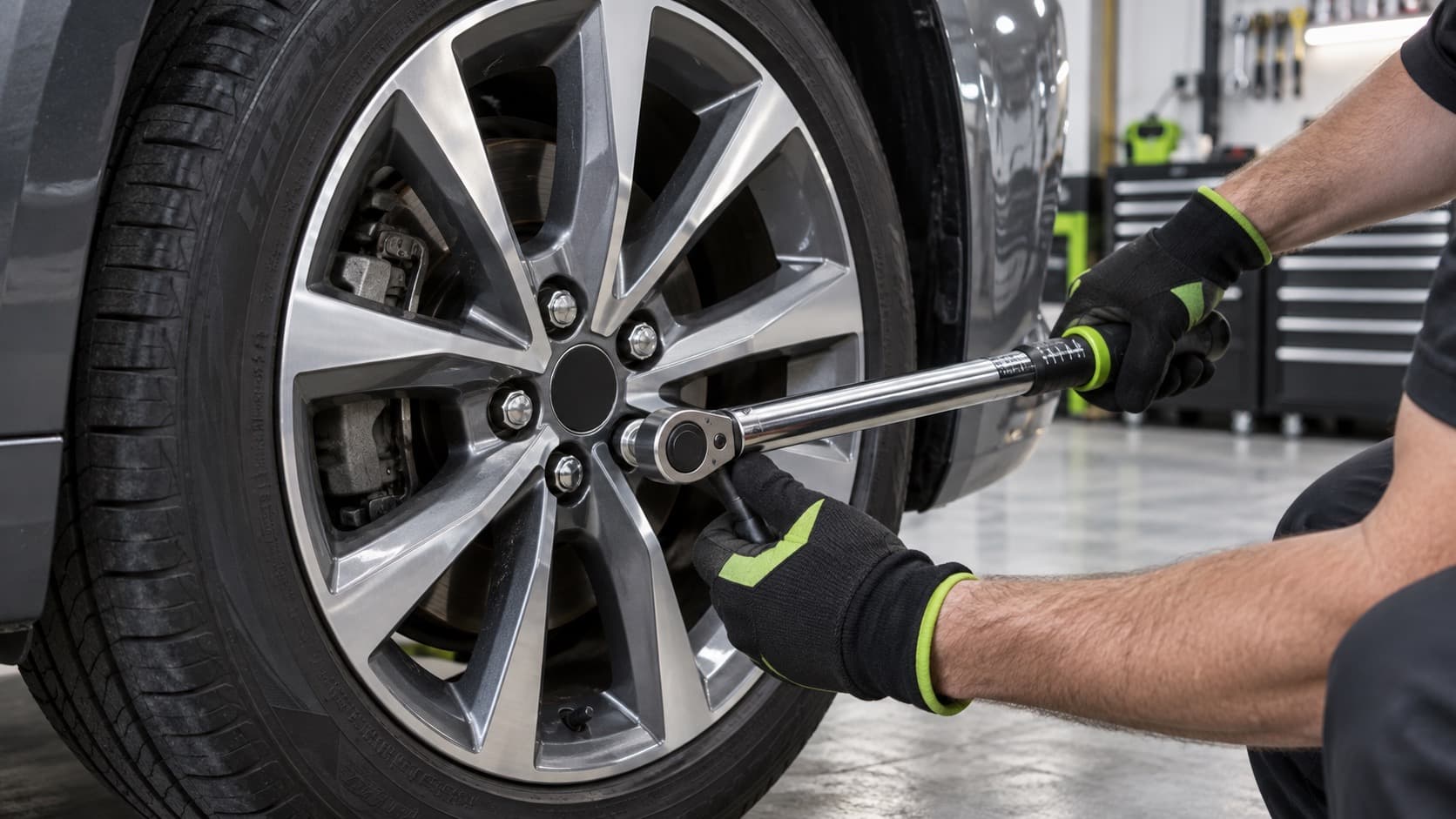
- Park on level ground, set the parking brake, and loosen the lug nuts a half turn while the wheels are on the ground.
- Lift the car and support it on jack stands. Never work under a car held by a jack alone.
- Remove the wheels and move them according to the pattern above.
- Hand-tighten the lug nuts, lower the car, then torque them in a star pattern to the spec in your manual (typically 80–100 ft-lb for cars, higher for trucks).
- Reset the tire pressure monitoring system if your vehicle requires it after rotation.
Most people have this done at a shop. It takes 20 to 30 minutes and the shop will also check tread depth, pressure, and balance while the wheels are off.
Signs you are overdue
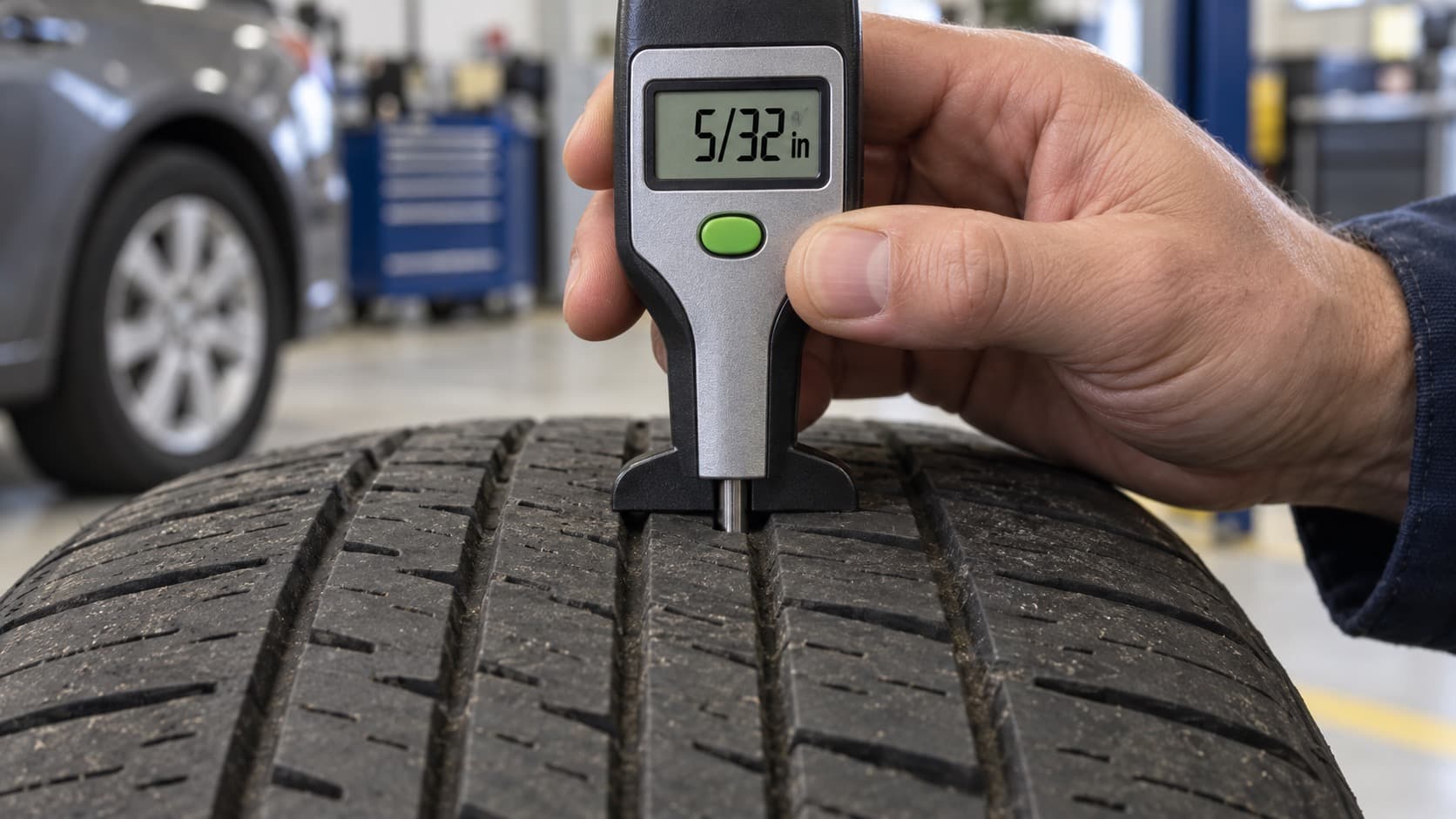
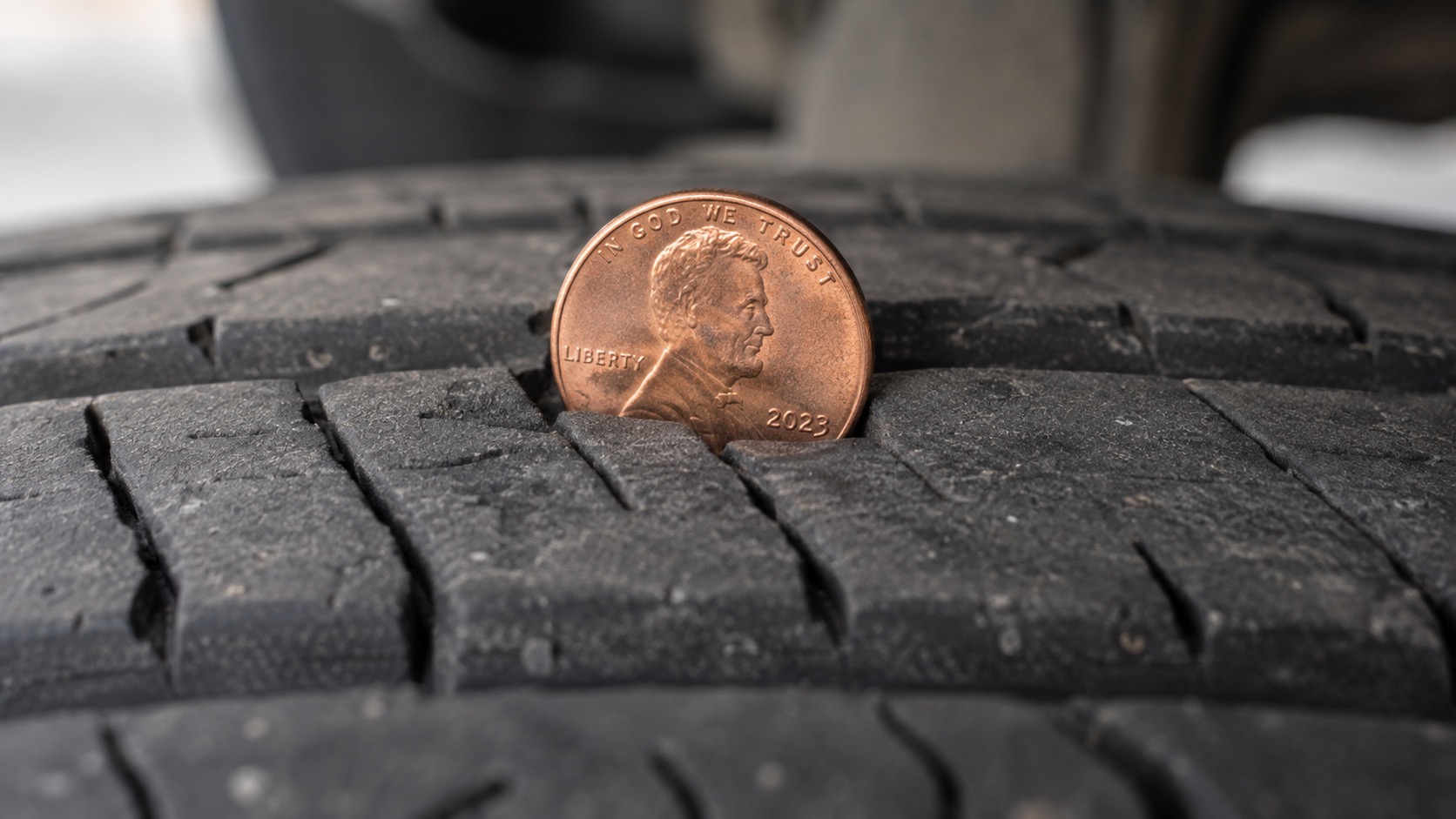
- Uneven tread depth front to rear. Measure with a gauge or use the penny test on each tire.
- Vibration at highway speed that was not there before, often a sign of uneven wear or a balance issue.
- A humming or droning noise that changes with speed.
- Pulling to one side, which can also point to alignment.
- Feathered or cupped tread, where blocks wear at an angle. Rotation slows this; alignment or suspension work fixes the cause.
What tire rotation costs
Many installers rotate for free on tires they installed. When you buy tires at TireDeals and choose a local installer, ask whether free rotations are included. A mobile installer can also rotate at your home.
Find tires for your vehicle
Enter your vehicle details to see tires that fit.
Find tires for your vehicle| Where | Typical cost | Notes |
|---|---|---|
| Independent shop or chain | $20–$50 | Often bundled with an oil change |
| Dealership | $40–$80 | May be included in a prepaid maintenance plan |
| With tire purchase | Free for the life of the tires | Common at retailers with an installer network |
| Do it yourself | $0 | Requires a jack, stands, and a torque wrench |
Can you skip it?
You can, but it costs you. Skipping rotation on a front-wheel-drive car wears out the front tires well before the rears. You then replace two tires early, or all four to keep them matched, and you may void the tread life warranty.
The one case where rotation is not possible is a staggered setup with directional tires, common on performance cars. Those tires wear in place and get replaced in pairs. Our staggered wheels guide covers what that means for tire life.
Frequently asked questions
Keep your tires wearing evenly. Find tires that fit your vehicle, with free shipping, a price match on every tire, and a local or mobile installer of your choice.