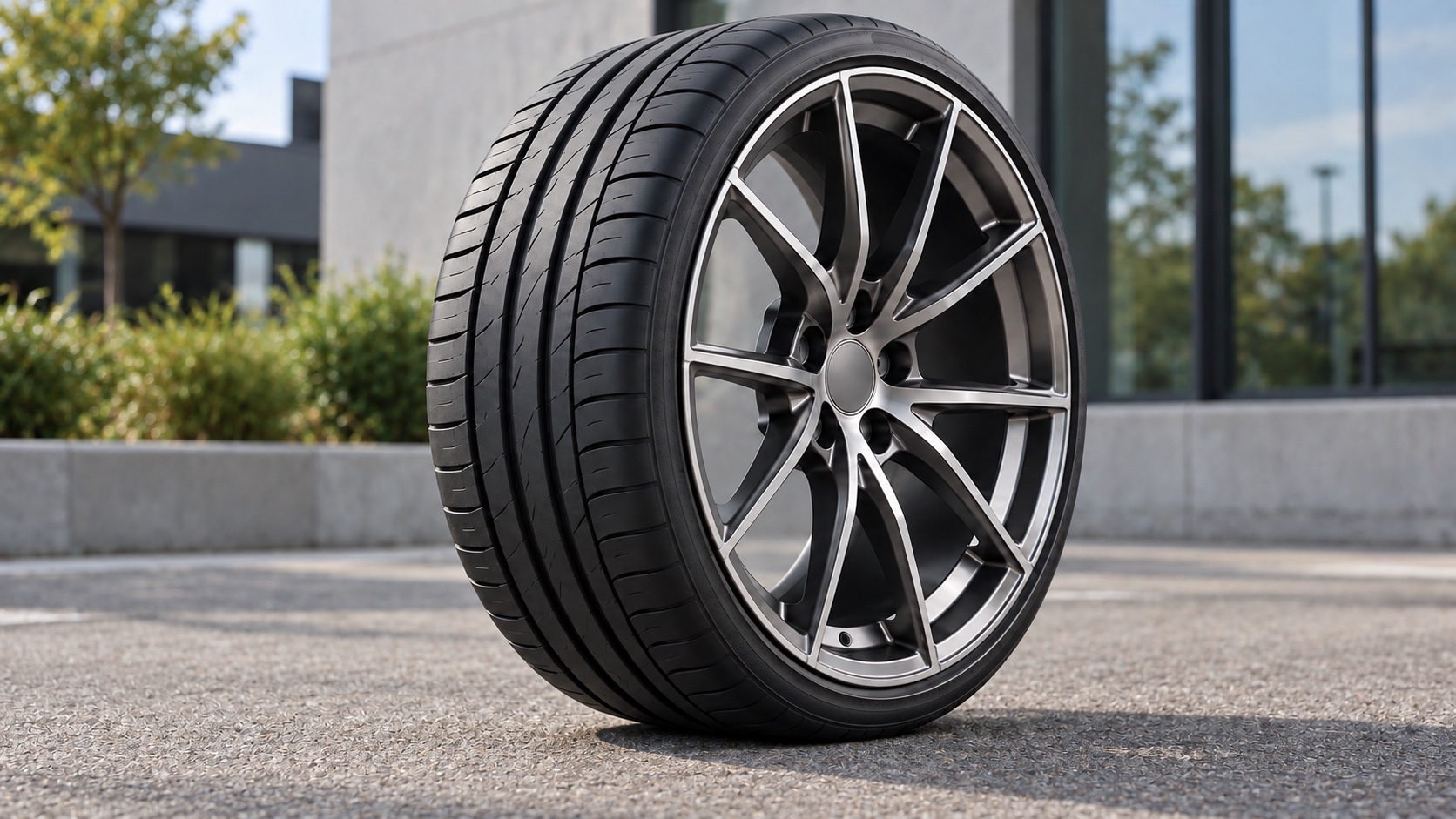
Low profile tires have a short sidewall for sharper handling and a sportier look, at the cost of ride comfort and pothole resistance. Learn what counts as low profile and whether they fit your car.
Low profile tires are tires with a short sidewall relative to their width, usually an aspect ratio of 50 or below. They sharpen steering response and look sportier on larger wheels, but they ride harder, are easier to damage on potholes, and often cost more. They make sense on performance cars and for drivers who value handling over comfort. Here is how to tell if a tire is low profile, what you gain and lose, and whether they fit your vehicle.
This guide is part of our complete guide to buying tires online.
In this guide
- What makes a tire low profile
- How to read the aspect ratio
- Pros of low profile tires
- Cons of low profile tires
- Who should buy them
- Can you put low profile tires on your car?
- How to choose the right low profile tire
- Frequently asked questions
What makes a tire low profile
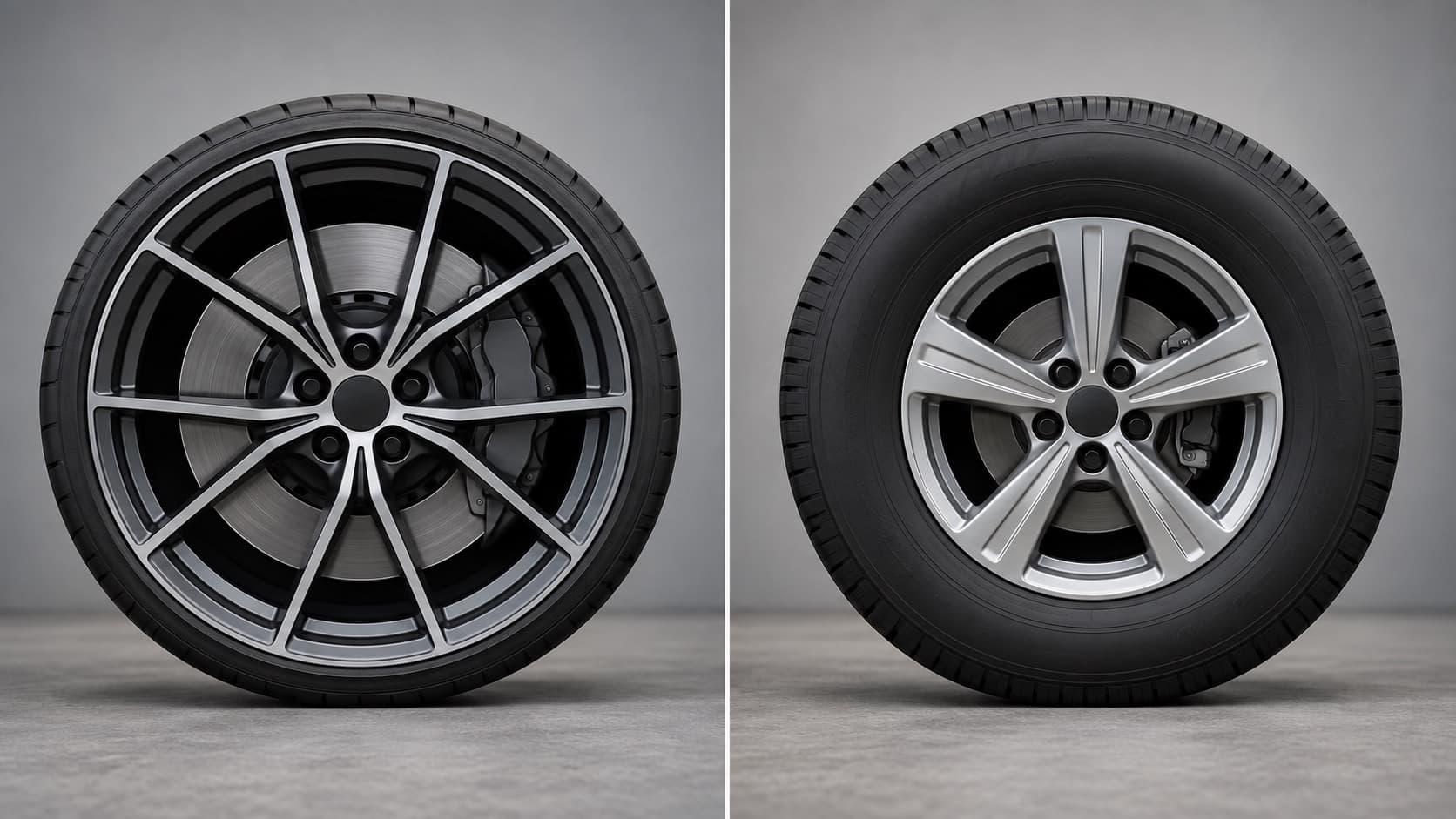
The profile of a tire is its sidewall height. A low profile tire has a short sidewall compared with its width, which is set by the aspect ratio in the size marking. There is no official cutoff, but most people in the industry treat 50 and below as low profile, 55 to 60 as standard, and 65 and above as tall.
| Aspect ratio | Category | Typical vehicles |
|---|---|---|
| 30–40 | Ultra low profile | Sports cars, performance sedans, large aftermarket wheels |
| 45–50 | Low profile | Sport trims, luxury sedans, performance SUVs |
| 55–60 | Standard | Most sedans, crossovers, and minivans |
| 65–75 | Tall | Trucks, off-road SUVs, economy cars |
Low profile tires almost always pair with larger-diameter wheels. The overall tire height stays close to stock so the speedometer and body clearance work; the wheel takes up more of the space and the sidewall takes up less.
How to read the aspect ratio
In a size like 245/40R19, the middle number is the aspect ratio. It means the sidewall height is 40 percent of the tire width. With a 245 mm width, that is a sidewall of about 98 mm, or just under 4 inches.
Compare that with 215/65R16, a common crossover size. The sidewall is 65 percent of 215 mm, about 140 mm or 5.5 inches. That extra inch and a half of rubber is what soaks up bumps.
Our how to read tire size guide covers every number on the sidewall.
Pros of low profile tires
- Sharper steering response. A short sidewall flexes less, so the car reacts faster when you turn the wheel. This is the main reason performance cars use them.
- Better cornering grip. Less sidewall flex keeps more of the tread flat on the road through a turn.
- Shorter braking distances, in many cases, because the stiffer tire transmits braking force more directly.
- The look. Larger wheels with thin sidewalls are the dominant style on modern cars, and many people choose them for appearance alone.
- Room for bigger brakes. Larger wheels clear larger brake rotors and calipers, which is why performance cars need them.
Cons of low profile tires
- Harsher ride. The sidewall is part of the suspension. Less of it means more of every bump reaches the cabin.
- More road noise. Stiffer sidewalls and wider tread transmit more sound.
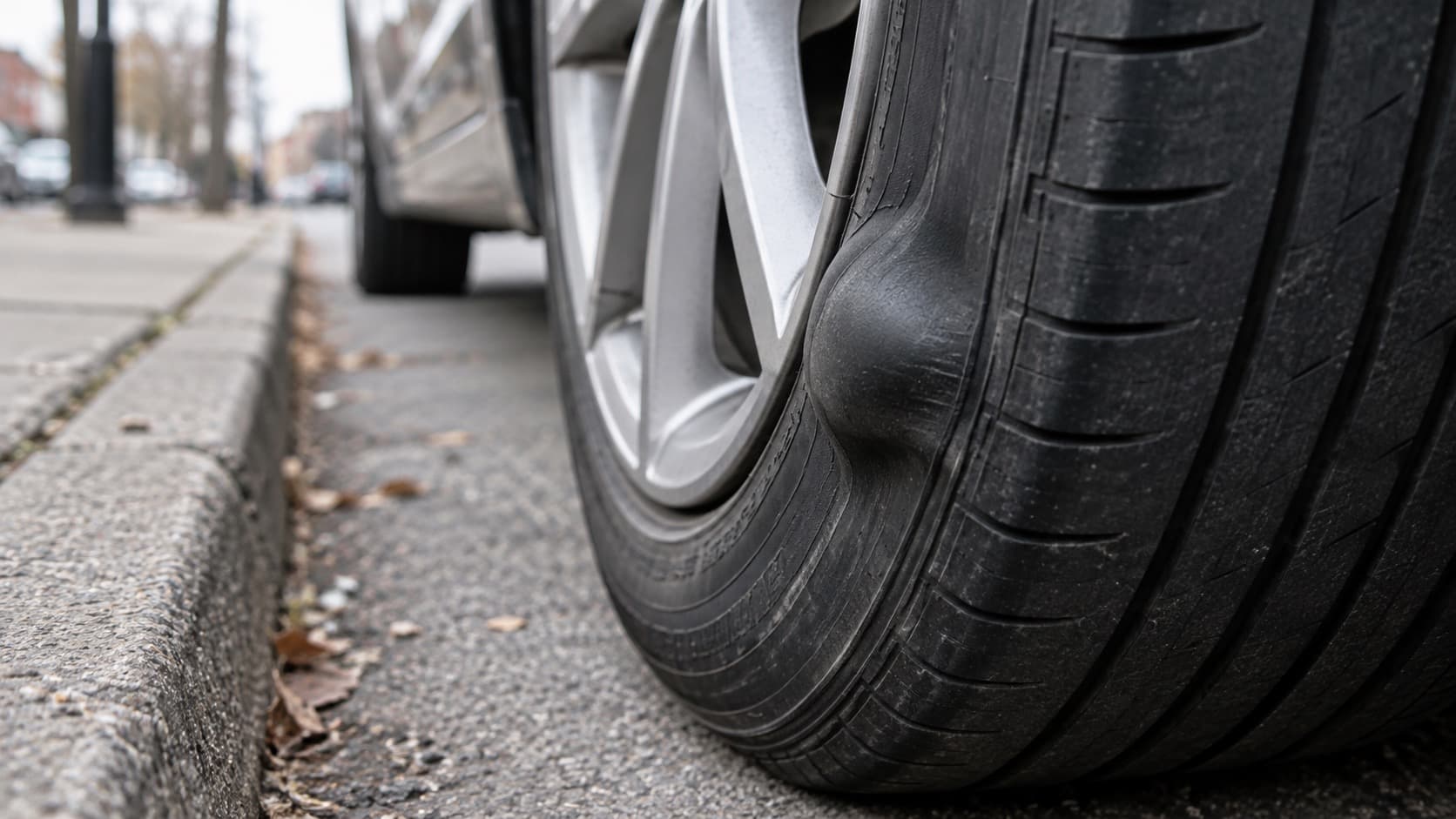
- Pothole and curb damage. With less sidewall to absorb an impact, a hard pothole hit can bend the wheel, bubble the sidewall, or both. This is the most common complaint from drivers who switch.
- Higher cost. Low profile sizes usually cost more per tire, and the larger wheels they pair with cost more to replace if damaged.
- Shorter tread life. Many low profile tires are performance compounds that wear faster. Tread warranties of 30,000 to 45,000 miles are common, versus 60,000 to 80,000 for touring tires.
- Worse in snow and on rough roads. A wide, stiff, low tire has less bite in snow and less give on gravel.
- Fewer run-flat and spare options. Many low profile setups skip a spare entirely, so a sidewall failure means a tow.
Who should buy them
Low profile tires are a good choice if you:
- Drive a sports car, performance sedan, or sport-trim SUV that came with them
- Care more about handling and steering feel than ride comfort
- Drive mostly on smooth, well-maintained roads
- Want the look and are willing to replace tires and wheels sooner
They are a poor choice if you:
- Drive on rough roads, in a city with bad potholes, or on gravel
- Want the longest tread life and the quietest ride for the money
- Live where it snows regularly and do not run winter tires
- Have a truck, minivan, or crossover used mainly for hauling people and cargo
Can you put low profile tires on your car?
Yes, if you keep the overall tire diameter within about 3 percent of stock and the new size fits under the fenders without rubbing. In practice that means going to a larger wheel at the same time, a process called plus sizing. Going one wheel size up (for example, 17 to 18 inches) with a correspondingly lower aspect ratio is the safest change; two sizes up is possible on many cars but needs careful measurement.
Three rules to keep:
- Keep the overall diameter within 3 percent of the original so the speedometer, ABS, and stability control stay accurate.
- Match or exceed the original load index and speed rating. Low profile tires often carry higher speed ratings anyway.
- Check wheel offset and width so the tire does not rub the fender or suspension at full lock or under load.
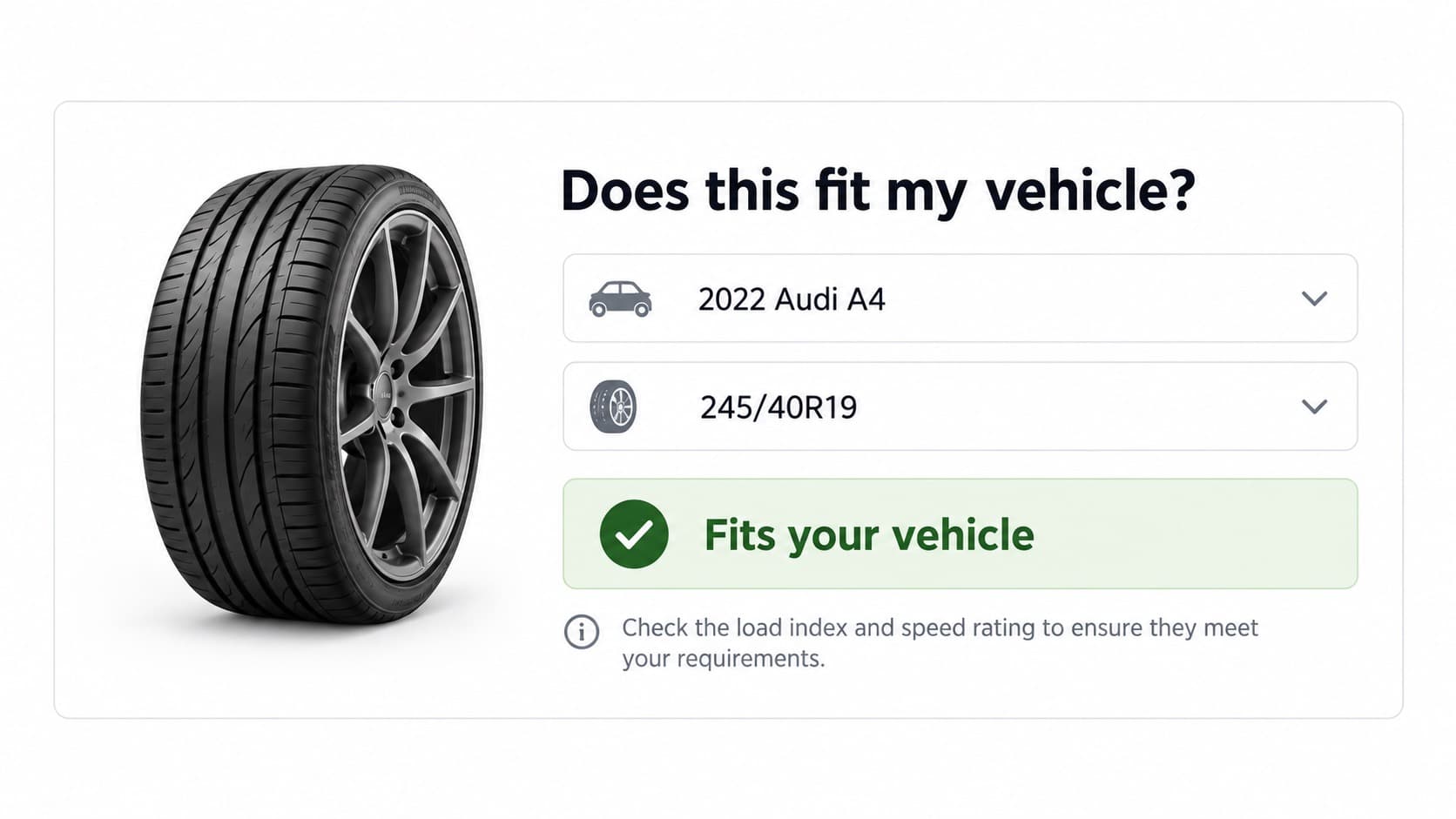
On any TireDeals product page, the “Does this fit my vehicle?” checker confirms whether a size is approved for your car before you buy. Use it for every plus-size change; a size that fits one trim may rub on another.
Find tires for your vehicle
Enter your vehicle details to see tires that fit.
Find tires for your vehicleHow to choose the right low profile tire
Most low profile sizes are sold in three families. Pick the one that matches your priorities.
If your car came with low profile tires and you want a smoother, quieter, longer-lasting replacement, a grand touring tire in the same size is the usual answer. If you want more grip, look at an ultra-high-performance all-season. Our best all-season tires guide covers the top performance all-season options.
| Type | Best for | Trade-off |
|---|---|---|
| Ultra-high-performance summer | Maximum dry and wet grip, track days | Useless below about 40°F; shortest tread life |
| Ultra-high-performance all-season | Sporty driving year-round in mild climates | Less grip than summer; better life and cold-weather use |
| Grand touring / touring in low profile sizes | Luxury sedans, comfort with a sporty look | Softer steering feel, longest tread life |
Frequently asked questions
Looking for low profile tires that fit? Search by vehicle or size, confirm fitment on the product page, and choose a local or mobile installer at checkout. Free shipping on every order and a price match on every tire.